
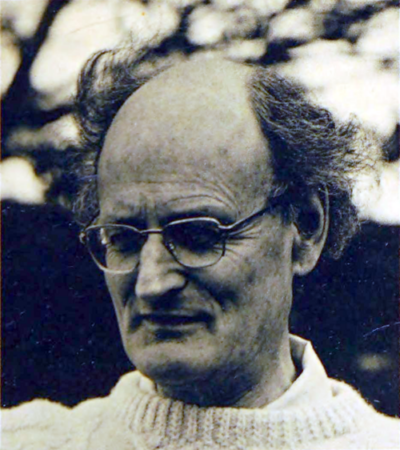
R. M. Hare
R. M. Hare was a British moral philosopher. Born March 12, 1919, in Backwell. Died January 29, 2002, in Ewelme. Educated at Balliol College and Rugby School.
Facts
17 facts · 1 confirmed by two sources · 7 cited · 8 from one source · 1 where the sources disagree
What’s different
- Born: we show March 12, 1919 (Sources disagree). Wikipedia says March 21, 1919
Where this comes from
Papalocal keeps its own record. It started from these sources; what each one said is kept here as it was copied, so a change on their side never changes this page by itself. Tap one to read its version.
What Wikidata says · copied November 16, 2026 · revision 2567479401
- Described as
- British moral philosopher (1919–2002)
- Other names
- Richard Mervyn Hare
- Born
- March 12, 1919 · 3 references
- Died
- January 29, 2002 · 6 references
- Born in
- Backwell · 1 reference
- Died in
- Ewelme · 1 reference
- Cause of death
- stroke
- Citizen of
- United Kingdom
- Occupation
- philosopher · 1 reference; university teacher
- Worked for
- University of Florida
- Education
- Balliol College; Rugby School
- Member of
- American Academy of Arts and Sciences
- Field
- ethics · 1 reference; philosophy · 1 reference; applied ethics · 1 reference; normative ethics · 1 reference
- Religion
- Anglicanism
- Wikipedias with a page
- 31
Wikidata item Q471923 (wikidata.org/wiki/Q471923), public domain (CC0). Copied November 16, 2026.
What Wikipedia says · copied November 16, 2026 · revision 1385797206
Richard Mervyn Hare (21 March 1919 – 29 January 2002) was a British moral philosopher who held the post of White's Professor of Moral Philosophy at the University of Oxford from 1966 until 1983. He subsequently taught for a number of years at the University of Florida. His meta-ethical theories were influential during the second half of the twentieth century.
Hare is best known for his development of prescriptivism as a meta-ethical theory, which he argues is supported by analysis of formal features of moral discourse, and for his defence of preference utilitarianism based on his prescriptivism.
Some of Hare's tutorial students, such as Brian McGuinness, John Lucas, and Bernard Williams, went on to become well-known philosophers. Hare's son, John E. Hare, also became a philosopher. Peter Singer, known for his involvement with the animal liberation movement (who studied Hare's work as an honours student at the University of Melbourne and came to know Hare personally while he was an Oxford BPhil graduate student), has explicitly adopted some elements of Hare's thought, though not his doctrine of universal prescriptivism.
- Born, in its opening lines
- March 21, 1919
- Died, in its opening lines
- January 29, 2002
From the Wikipedia article “R. M. Hare” (en.wikipedia.org/wiki/R._M._Hare), by its contributors, under CC BY-SA 4.0 (creativecommons.org/licenses/by-sa/4.0/). Copied November 16, 2026; not changed.
Confirmed Two sources agree. Cited One source, and it names where it got it. One source One source, without a reference of its own. Sources disagree The sources disagree. We show the best-supported value and keep theirs below.
