
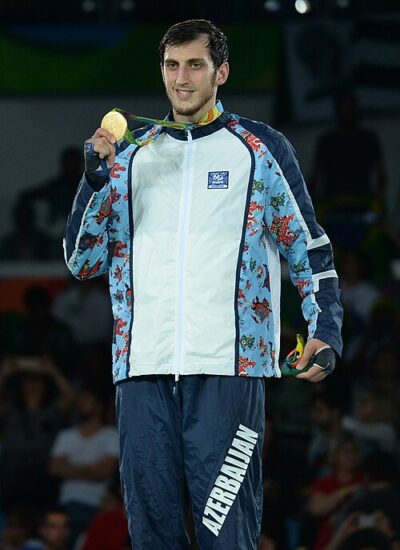
Radik Isayev
Radik Isayev is an Azerbaijani taekwondo practitioner. Born September 26, 1989, in Ukhul. Awards include Master of Sports of Russia, Shohrat Order and 1st degree "For Service to the Fatherland" order.
Facts
10 facts · 1 confirmed by two sources · 0 cited · 9 from one source
Where this comes from
Papalocal keeps its own record. It started from these sources; what each one said is kept here as it was copied, so a change on their side never changes this page by itself. Tap one to read its version.
What Wikidata says · copied November 17, 2026 · revision 2526785333
- Described as
- Azerbaijani taekwondo practitioner
- Born
- September 26, 1989
- Born in
- Ukhul
- Citizen of
- Azerbaijan (2012–); Russia (–2012)
- Occupation
- taekwondo athlete
- Sport
- taekwondo
- Awards
- Master of Sports of Russia; Shohrat Order; 1st degree "For Service to the Fatherland" order
- Height
- 2.00 m (6 ft 7 in)
- Wikipedias with a page
- 25
Wikidata item Q16745340 (wikidata.org/wiki/Q16745340), public domain (CC0). Copied November 17, 2026.
What Wikipedia says · copied November 17, 2026 · revision 1371553818
Radik Isayev (born September 26, 1989, in Ukhul, Akhtynsky District, Dagestan) is a Russian-born naturalized Azerbaijani taekwondo practitioner of Lezgin origin. He won the gold medal at the 2014 European Championships in the men's 87 kg event, and also won bronze at the 2013 World Championships. Radik also won a gold medal at the 2016 Summer Olympics in Rio.
Olympic and World Champion Radik Isayev from Azerbaijan won a gold medal at the 2016 Rio Summer Olympics. Radik became World Champion in 2015 and won bronze at World Championships in 2016. Radik became champion of 1st European Games in 2015. He is 2 times European Champion and 2 times World Cup Champion.
He became champion of Islamic Games in 2017.
- Born, in its opening lines
- September 26, 1989
From the Wikipedia article “Radik Isayev” (en.wikipedia.org/wiki/Radik_Isayev), by its contributors, under CC BY-SA 4.0 (creativecommons.org/licenses/by-sa/4.0/). Copied November 17, 2026; not changed.
Confirmed Two sources agree. Cited One source, and it names where it got it. One source One source, without a reference of its own. Sources disagree The sources disagree. We show the best-supported value and keep theirs below.
