
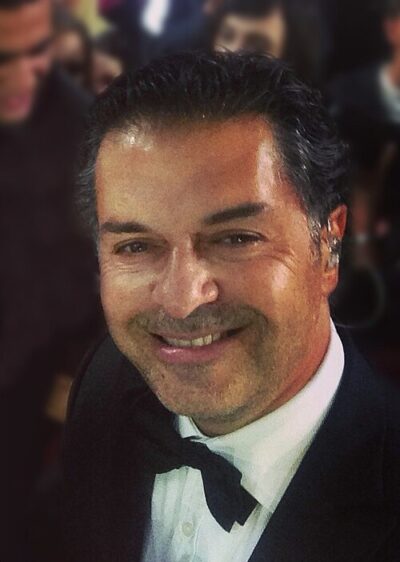
Ragheb Alama
Ragheb Alama is a Lebanese singer, composer, television personality. Born June 7, 1962, in Ghobeiry. Positions held include goodwill ambassador (2013–).
Facts
28 facts · 1 confirmed by two sources · 3 cited · 24 from one source
Where this comes from
Papalocal keeps its own record. It started from these sources; what each one said is kept here as it was copied, so a change on their side never changes this page by itself. Tap one to read its version.
What Wikidata says · copied November 18, 2026 · revision 2567254575
- Described as
- Lebanese singer, composer, television personality
- Born
- June 7, 1962
- Born in
- Ghobeiry
- Name at birth
- راغب صبحي علامة
- Citizen of
- Lebanon; Canada; United Arab Emirates
- Occupation
- singer; composer; actor; oud player; television personality; philanthropist; musician · 1 reference
- Positions held
- goodwill ambassador (2013–)
- Member of
- Syndicate of Professional Artists in Lebanon
- Genre
- Arabic pop; Arabic music
- Instrument
- voice; oud
- Record label
- Rotana Music Group; Relax-In; Alam El Phan; Melody Music; Mazzika; Backstage Production
- Spouse
- Jihan Ali ann (1996–) · 2 references
- Siblings
- Khodr Alama
- Religion
- Islam · 2 references
- Wikipedias with a page
- 14
Wikidata item Q1237110 (wikidata.org/wiki/Q1237110), public domain (CC0). Copied November 18, 2026.
What Wikipedia says · copied November 18, 2026 · revision 1385608212
Ragheb Sobhi Alama (Arabic: راغب صبحي علامة; born 7 June 1962) is a Lebanese music artist and television personality. Alama began his career in the 1980s when he appeared as a contestant on the talent show broadcast Studio El Fan, on which he received the Platinum Award.
Alama rose to fame after winning Studio El Fan, since then releasing yearly albums and number-one hit singles such as "Ya Rait" (If Only), "'Aan Jad" (Seriously) and "Alby Asheq'ha" (My Heart Adores Her), which was the first Arabic song in history to be made into a music video. Alama continued his success into the 2000s with the release of his chart-topping albums Saharony El Leil (2001), Tab Leh (2002), El Hob El Kebeer (2004) and Ba'asha'ak (2008), the latter which earned the artist the Platinum certification from Virgin Megastores for its record sales. In 2009, he is appointed as the United Nations Ambassador of Climate Change. In 2010, his album Seneen Rayha saw the artist team with Starbucks for its release and sale, making him the first Arab artist to have his album sold at Starbucks. His follow-up album Habib Dehkati also included a song featuring international pop artist Shakira.
Alama has won two Murex d'Or Awards and several other awards during his career. His albums have made him one of the most commercially successful singers in the Arab world. In mid-2011, it was announced that Alama would head the judging panel for the pan-Arab version of the American Idol series.
- Born, in its opening lines
- June 7, 1962
From the Wikipedia article “Ragheb Alama” (en.wikipedia.org/wiki/Ragheb_Alama), by its contributors, under CC BY-SA 4.0 (creativecommons.org/licenses/by-sa/4.0/). Copied November 18, 2026; not changed.
Confirmed Two sources agree. Cited One source, and it names where it got it. One source One source, without a reference of its own. Sources disagree The sources disagree. We show the best-supported value and keep theirs below.
