
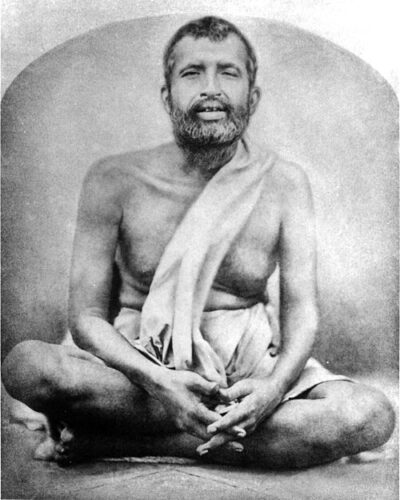
Ramakrishna
Ramakrishna was an Indian mystic and religious preacher. Born February 18, 1836, in Kamarpukur. Died August 16, 1886, in Kolkata.
Facts
12 facts · 2 confirmed by two sources · 6 cited · 4 from one source
Where this comes from
Papalocal keeps its own record. It started from these sources; what each one said is kept here as it was copied, so a change on their side never changes this page by itself. Tap one to read its version.
What Wikidata says · copied November 16, 2026 · revision 2564123158
- Described as
- Indian mystic and religious preacher (1836–1886)
- Other names
- Gadadhar Chattopadhyay, Sri Ramakrishna Paramahamsa, Sri Ramakrishna, Ramakrishna Paramahamsa
- Born
- February 18, 1836 · 4 references
- Died
- August 16, 1886 · 4 references
- Born in
- Kamarpukur
- Died in
- Kolkata · 1 reference
- Cause of death
- laryngeal cancer · 1 reference
- Citizen of
- British Raj
- Occupation
- philosopher · 1 reference
- Field
- philosophy
- Spouse
- Sarada Devi (1859–1886) · 1 reference
- Father
- Khudiram Chattopadhyay · 1 reference
- Mother
- Chandramani Devi · 1 reference
- Religion
- Hinduism
- Wikipedias with a page
- 115
Wikidata item Q183126 (wikidata.org/wiki/Q183126), public domain (CC0). Copied November 16, 2026.
What Wikipedia says · copied November 16, 2026 · revision 1385265331
Ramakrishna (18 February 1836 – 16 August 1886), also called Ramakrishna Paramahamsa (pronounced [ramɔkriʂno pɔromoɦɔŋʃo] ; IAST: Rāmakṛṣṇa Paramahaṃsa), born Ramakrishna Chattopadhyay (his childhood nickname was Gadadhar), was an Indian Hindu mystic. He was a devotee of the goddess Kali, but adhered to various religious practices from the Hindu traditions of Vaishnavism, Tantric Shaktism, and Advaita Vedanta, as well as Christianity and Sufi Islam. His parable-based teachings advocated the essential unity of religions and proclaimed that world religions are "so many paths to reach one and the same goal". He is regarded by his followers as an avatar (divine incarnation).
Ramakrishna was born in Kamarpukur, Bengal Presidency, India. He described going through religious experiences in childhood. Around the age of twenty, he became a temple priest at the Dakshineshwar Kali Temple in Calcutta. While at the temple, his devotional temperament and intense religious practices led him to experience various spiritual visions. He was assured of the authenticity and sanctity of his visions by several religious teachers.
Ramakrishna's native language was Bengali, but he also spoke Hindi (Hindustani) and understood Sanskrit. There are instances recorded in the Gospel of Ramakrishna of him using English words a few times.
In 1859, in accordance with then prevailing customs, Ramakrishna was married to Sarada Devi, a marriage that was never consummated. As described in the Gospel of Ramakrishna, he took spiritual instruction from several gurus in various paths and religions, and was also initiated into sannyasa in 1865 by Tota Puri, a vedanta monk. Ramakrishna gained widespread acclaim amongst the temple visiting public as a guru, attracting social leaders, elites, and common people alike. Although initially reluctant to consider himself a guru, he eventually taught disciples and founded the monastic Ramakrishna Order. His emphasis on direct spiritual experience instead of adhering to scriptural injunctions has been influential. Ramakrishna died due to throat cancer on the night of 15 August 1886. After his death, his chief disciple Swami Vivekananda continued and expanded his spiritual mission, both in India and the West.
- Born, in its opening lines
- February 18, 1836
- Died, in its opening lines
- August 16, 1886
From the Wikipedia article “Ramakrishna” (en.wikipedia.org/wiki/Ramakrishna), by its contributors, under CC BY-SA 4.0 (creativecommons.org/licenses/by-sa/4.0/). Copied November 16, 2026; not changed.
Confirmed Two sources agree. Cited One source, and it names where it got it. One source One source, without a reference of its own. Sources disagree The sources disagree. We show the best-supported value and keep theirs below.
