
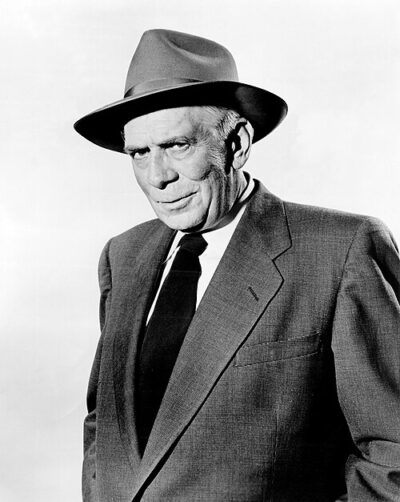
Ray Collins
Ray Collins was an American actor. Born December 10, 1889, in Sacramento. Died July 11, 1965, in Santa Monica.
Facts
11 facts · 2 confirmed by two sources · 3 cited · 6 from one source
Where this comes from
Papalocal keeps its own record. It started from these sources; what each one said is kept here as it was copied, so a change on their side never changes this page by itself. Tap one to read its version.
What Wikidata says · copied November 16, 2026 · revision 2567533358
- Described as
- American actor (1889–1965)
- Other names
- Ray Bidwell Collins
- Born
- December 10, 1889 · 3 references
- Died
- July 11, 1965 · 3 references
- Born in
- Sacramento · 1 reference
- Died in
- Santa Monica · 1 reference
- Buried in
- Forest Lawn Memorial Park
- Cause of death
- pulmonary emphysema
- Citizen of
- United States
- Occupation
- film actor; television actor; stage actor; actor · 1 reference
- Wikipedias with a page
- 21
Wikidata item Q1550341 (wikidata.org/wiki/Q1550341), public domain (CC0). Copied November 16, 2026.
What Wikipedia says · copied November 16, 2026 · revision 1379634469
Ray Bidwell Collins (December 10, 1889 – July 11, 1965) was an American character actor in stock and Broadway theatre, radio, films, and television. With 900 stage roles to his credit, he became one of the most successful actors in the developing field of radio drama. A friend and associate of Orson Welles for many years, Collins went to Hollywood with the Mercury Theatre company and made his feature-film debut in Citizen Kane (1941), as Kane's political rival. Collins appeared in more than 75 films and had one of his best-remembered roles on television, as Los Angeles homicide detective Lieutenant Arthur Tragg in the CBS-TV series Perry Mason.
- Born, in its opening lines
- December 10, 1889
- Died, in its opening lines
- July 11, 1965
From the Wikipedia article “Ray Collins (actor)” (en.wikipedia.org/wiki/Ray_Collins_(actor)), by its contributors, under CC BY-SA 4.0 (creativecommons.org/licenses/by-sa/4.0/). Copied November 16, 2026; not changed.
Confirmed Two sources agree. Cited One source, and it names where it got it. One source One source, without a reference of its own. Sources disagree The sources disagree. We show the best-supported value and keep theirs below.
