
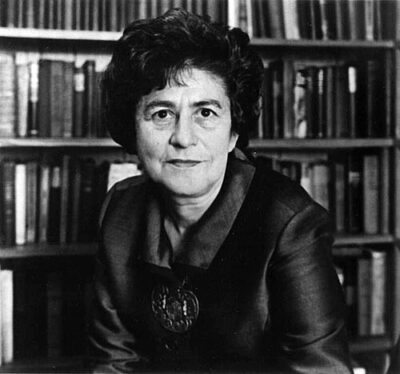
Raya Dunayevskaya
Raya Dunayevskaya was an American philosopher. Born May 1, 1910, in Yaryshiv. Died June 9, 1987, in Chicago.
Facts
16 facts · 2 confirmed by two sources · 3 cited · 11 from one source
Where this comes from
Papalocal keeps its own record. It started from these sources; what each one said is kept here as it was copied, so a change on their side never changes this page by itself. Tap one to read its version.
What Wikidata says · copied November 16, 2026 · revision 2568879296
- Described as
- American philosopher (1910-1987)
- Born
- May 1, 1910 · 2 references
- Died
- June 9, 1987 · 2 references
- Born in
- Yaryshiv
- Died in
- Chicago
- Buried in
- Haymarket Martyrs' Monument · 1 reference
- Citizen of
- United States
- Occupation
- philosopher; economist · 1 reference; activist · 1 reference
- Political party
- Socialist Workers Party
- Field
- philosophy; social theory · 1 reference; social revolution · 1 reference; social movement · 1 reference; Trotskyism · 1 reference; libertarian socialism · 1 reference
- Wikipedias with a page
- 20
Wikidata item Q438632 (wikidata.org/wiki/Q438632), public domain (CC0). Copied November 16, 2026.
What Wikipedia says · copied November 16, 2026 · revision 1385697627
Raya Dunayevskaya (born Raya Shpigel, Рая Шпигель; May 1, 1910 – June 9, 1987), later Rae Spiegel, also known by the pseudonym Freddie Forest, was an American political writer and philosopher who founded the philosophy of Marxist humanism in the United States. At one time Leon Trotsky's secretary, she later split with him and ultimately founded the organization News and Letters Committees and was its leader until her death.
- Born, in its opening lines
- May 1, 1910
- Died, in its opening lines
- June 9, 1987
From the Wikipedia article “Raya Dunayevskaya” (en.wikipedia.org/wiki/Raya_Dunayevskaya), by its contributors, under CC BY-SA 4.0 (creativecommons.org/licenses/by-sa/4.0/). Copied November 16, 2026; not changed.
Confirmed Two sources agree. Cited One source, and it names where it got it. One source One source, without a reference of its own. Sources disagree The sources disagree. We show the best-supported value and keep theirs below.
