
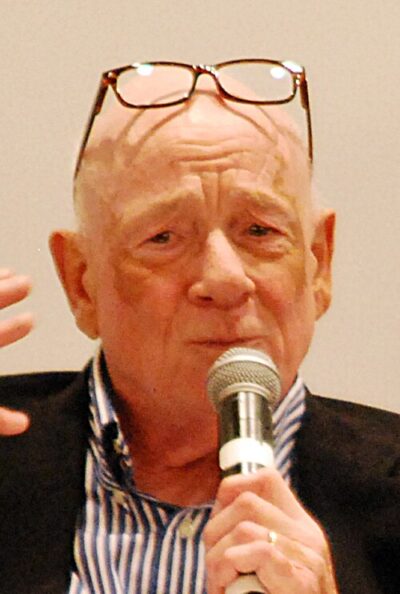
Raymond Moody
Raymond Moody is an American psychologist. Born June 30, 1944, in Porterdale. Educated at University of Virginia. Awards include Boulder Prize.
Facts
16 facts · 1 confirmed by two sources · 6 cited · 9 from one source
Where this comes from
Papalocal keeps its own record. It started from these sources; what each one said is kept here as it was copied, so a change on their side never changes this page by itself. Tap one to read its version.
What Wikidata says · copied November 15, 2026 · revision 2568739033
- Described as
- American psychologist
- Born
- June 30, 1944 · 2 references
- Born in
- Porterdale
- Citizen of
- United States
- Occupation
- physician; psychologist; writer; psychiatrist · 1 reference; philosopher · 1 reference
- Worked for
- University of Nevada, Las Vegas
- Education
- University of Virginia
- Awards
- Boulder Prize (2010–)
- Field
- psychiatry · 1 reference; psychology · 1 reference; parapsychology · 1 reference; creative and professional writing · 1 reference; philosophy · 1 reference
- Wikipedias with a page
- 26
Wikidata item Q536790 (wikidata.org/wiki/Q536790), public domain (CC0). Copied November 15, 2026.
What Wikipedia says · copied November 15, 2026 · revision 1371543159
Raymond A. Moody Jr. (born June 30, 1944) is an American philosopher, psychiatrist, and author, most widely known for his books about afterlife and near-death experiences (NDE), a term that he coined in 1975 in his best-selling book Life After Life. His research explores personal accounts of subjective phenomena encountered in near-death experiences, particularly those of people who have apparently died but been resuscitated. He has widely published his views on what he terms near-death-experience psychology.
- Born, in its opening lines
- June 30, 1944
From the Wikipedia article “Raymond Moody” (en.wikipedia.org/wiki/Raymond_Moody), by its contributors, under CC BY-SA 4.0 (creativecommons.org/licenses/by-sa/4.0/). Copied November 15, 2026; not changed.
Confirmed Two sources agree. Cited One source, and it names where it got it. One source One source, without a reference of its own. Sources disagree The sources disagree. We show the best-supported value and keep theirs below.
