
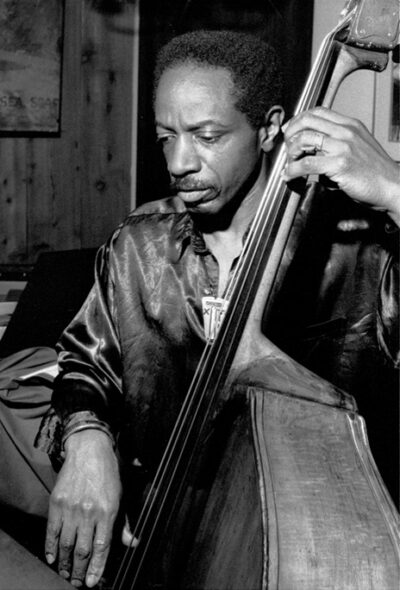
Reggie Workman
Reggie Workman is an American double-bassist. Born June 26, 1937, in Philadelphia. Awards include Guggenheim Fellowship and NEA Jazz Masters.
Facts
24 facts · 1 confirmed by two sources · 6 cited · 17 from one source
Where this comes from
Papalocal keeps its own record. It started from these sources; what each one said is kept here as it was copied, so a change on their side never changes this page by itself. Tap one to read its version.
What Wikidata says · copied November 18, 2026 · revision 2567006375
- Described as
- American double-bassist
- Born
- June 26, 1937 · 2 references
- Born in
- Philadelphia · 1 reference
- Name at birth
- Reginald Workman · 1 reference
- Citizen of
- United States
- Occupation
- jazz musician · 1 reference; university teacher; music educator; double-bassist; recording artist; musician · 1 reference
- Worked for
- The New School
- Member of
- The Super Jazz Trio; Reggie Workman Ensemble; Trio 3; Marilyn Crispell Trio; John Coltrane Quartet; John Coltrane Quintet
- Genre
- jazz
- Instrument
- double bass
- Record label
- Black Saint
- Awards
- Guggenheim Fellowship (2020) · 1 reference; NEA Jazz Masters
- Children
- Nioka Workman · 1 reference
- Website
- https://www.reggieworkmanmusic.com
- Wikipedias with a page
- 15
Wikidata item Q780037 (wikidata.org/wiki/Q780037), public domain (CC0). Copied November 18, 2026.
What Wikipedia says · copied November 18, 2026 · revision 1339676469
Reginald "Reggie" Workman (born June 26, 1937) is an American avant-garde jazz and hard bop double bassist, recognized for his work with both John Coltrane and Art Blakey, in addition to Alice Coltrane, Mal Waldron, Max Roach, Archie Shepp, Trio Three (with Oliver Lake and Andrew Cyrille), Trio Transition, the Reggie Workman Ensemble, and collaborative projects with dance, poetry and drama.
- Born, in its opening lines
- June 26, 1937
From the Wikipedia article “Reggie Workman” (en.wikipedia.org/wiki/Reggie_Workman), by its contributors, under CC BY-SA 4.0 (creativecommons.org/licenses/by-sa/4.0/). Copied November 18, 2026; not changed.
Confirmed Two sources agree. Cited One source, and it names where it got it. One source One source, without a reference of its own. Sources disagree The sources disagree. We show the best-supported value and keep theirs below.
