
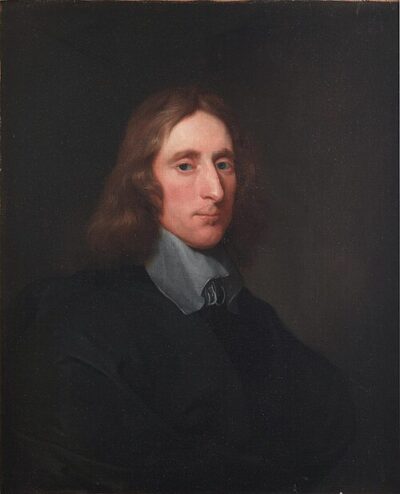
Richard Cromwell
Richard Cromwell was an English politician and Lord Protector. Born October 4, 1626, in Huntingdon. Died July 12, 1712, in Cheshunt. Positions held include Member of Parliament in the Parliament of England, Lord Protector (1658–1659) and Member of the Second Protectorate Parliament. Educated at Felsted School.
Facts
25 facts · 2 confirmed by two sources · 8 cited · 15 from one source
Where this comes from
Papalocal keeps its own record. It started from these sources; what each one said is kept here as it was copied, so a change on their side never changes this page by itself. Tap one to read its version.
What Wikidata says · copied November 16, 2026 · revision 2567351349
- Described as
- English politician and Lord Protector (1626–1712)
- Born
- October 4, 1626 · 8 references
- Died
- July 12, 1712 · 9 references
- Born in
- Huntingdon
- Died in
- Cheshunt · 1 reference
- Buried in
- Church of All Saints, Hursley
- Citizen of
- Kingdom of Great Britain; Commonwealth of England
- Occupation
- politician · 1 reference
- Positions held
- Member of Parliament in the Parliament of England; Lord Protector (1658–1659); Member of the Second Protectorate Parliament; Member of the First Protectorate Parliament; Member of the 1648-53 Parliament; Chancellor of the University of Oxford (1657–1660)
- Political party
- Roundhead
- Education
- Felsted School
- Spouse
- Dorothy Maijor · 1 reference
- Children
- Anne Cromwell · 1 reference
- Father
- Oliver Cromwell · 1 reference
- Mother
- Elizabeth Cromwell · 1 reference
- Siblings
- Henry Cromwell; Bridget Cromwell · 1 reference; Frances Cromwell · 1 reference; Elizabeth Claypole; Mary Cromwell, Countess Fauconberg
- Wikipedias with a page
- 54
Wikidata item Q203980 (wikidata.org/wiki/Q203980), public domain (CC0). Copied November 16, 2026.
What Wikipedia says · copied November 16, 2026 · revision 1371326654
Richard Cromwell (4 October 1626 – 12 July 1712) was an English statesman who served as Lord Protector of the Commonwealth of England, Scotland and Ireland from 1658 to 1659. He was the son of Lord Protector Oliver Cromwell.
Following his father's death in 1658, Richard became Lord Protector, but he lacked authority. He tried to mediate between the army and civil society, and allowed a Parliament that contained many disaffected Presbyterians and Royalists to sit. Suspicions that civilian councillors were intent on supplanting the army peaked in an attempt to prosecute a major-general for actions against a Royalist. The army made a threatening demonstration of force against Richard, and may have had him in detention. He formally renounced power only nine months after succeeding.
Though a Royalist revolt was crushed by the recalled civil war figure General John Lambert, who subsequently prevented the Rump Parliament from reconvening and created a Committee of Safety, Lambert found his troops melted away in the face of General George Monck's advance from Scotland. Monck then presided over the Restoration of 1660. Cromwell went into exile on the Continent, living in relative obscurity for the remainder of his life. He ultimately returned to his English estate and died thirty years later at the age of 85.
- Born, in its opening lines
- October 4, 1626
- Died, in its opening lines
- July 12, 1712
From the Wikipedia article “Richard Cromwell” (en.wikipedia.org/wiki/Richard_Cromwell), by its contributors, under CC BY-SA 4.0 (creativecommons.org/licenses/by-sa/4.0/). Copied November 16, 2026; not changed.
Confirmed Two sources agree. Cited One source, and it names where it got it. One source One source, without a reference of its own. Sources disagree The sources disagree. We show the best-supported value and keep theirs below.
