
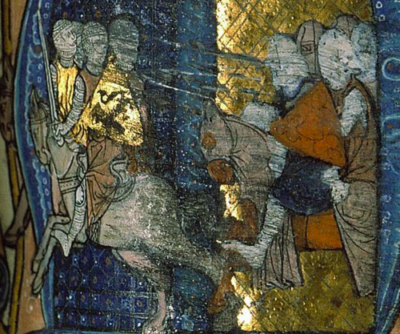
Richard, Duke of Burgundy was a Duke of Burgundy. Born 858. Died September 1, 921, in Auxerre.
Facts
14 facts · 2 confirmed by two sources · 2 cited · 10 from one source
Where this comes from
Papalocal keeps its own record. It started from these sources; what each one said is kept here as it was copied, so a change on their side never changes this page by itself. Tap one to read its version.
What Wikidata says · copied November 17, 2026 · revision 2554211202
- Described as
- Duke of Burgundy (858-921)
- Other names
- Richard de Bourgogne, Duc de Bourgogne
- Born
- 858 · 1 reference
- Died
- September 1, 921
- Died in
- Auxerre
- Occupation
- politician
- Spouse
- Adelaide of Auxerre · 1 reference
- Children
- Rudolph of France; Hugh the Black; Boso I, Count of Provence; Richilde of Burgundy; Adelaide of Burgundy; Ermengarde of Burgundy · 1 reference
- Father
- Bivin of Gorze
- Siblings
- Boso of Provence; Richilde of Provence · 1 reference
- Wikipedias with a page
- 25
Wikidata item Q559316 (wikidata.org/wiki/Q559316), public domain (CC0). Copied November 17, 2026.
What Wikipedia says · copied November 17, 2026 · revision 1362312134
Richard the Justiciar (858–921), also known as Richard of Autun, was count of Autun from 880 and the first margrave and duke of Burgundy. He attained suzerainty over all the counties of Burgundy save Mâcon, and by 890, he was referred to as dux (duke) and by 900 as marchio (margrave). By 918, he was being called dux Burgundionem or dux Burgundiae, which probably signified less the existence of a unified Burgundian duchy than feudal suzerainty over a multiplicity of counties in a specific region.
- Born, in its opening lines
- 858
- Died, in its opening lines
- 921
From the Wikipedia article “Richard the Justiciar” (en.wikipedia.org/wiki/Richard_the_Justiciar), by its contributors, under CC BY-SA 4.0 (creativecommons.org/licenses/by-sa/4.0/). Copied November 17, 2026; not changed.
Confirmed Two sources agree. Cited One source, and it names where it got it. One source One source, without a reference of its own. Sources disagree The sources disagree. We show the best-supported value and keep theirs below.
