
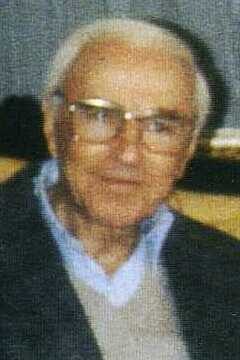
Richard Fleischer
Richard Fleischer was an American film director. Born December 8, 1916, in Brooklyn. Died March 25, 2006, in Woodland Hills. Educated at Yale School of Drama and Brown University. Awards include Academy Award for Best Documentary Feature Film and Disney Legends.
Facts
13 facts · 2 confirmed by two sources · 6 cited · 5 from one source
Where this comes from
Papalocal keeps its own record. It started from these sources; what each one said is kept here as it was copied, so a change on their side never changes this page by itself. Tap one to read its version.
What Wikidata says · copied November 15, 2026 · revision 2558223874
- Described as
- American film director (1916–2006)
- Other names
- Richard O. Fleischer, Richard Owen Fleischer
- Born
- December 8, 1916 · 9 references
- Died
- March 25, 2006 · 8 references
- Born in
- Brooklyn · 1 reference
- Died in
- Woodland Hills · 1 reference
- Citizen of
- United States
- Occupation
- film director · 1 reference; screenwriter; director · 2 references
- Education
- Yale School of Drama; Brown University
- Awards
- Academy Award for Best Documentary Feature Film (1948) · 1 reference; Disney Legends (2003) · 1 reference
- Father
- Max Fleischer · 1 reference
- Wikipedias with a page
- 32
Wikidata item Q262735 (wikidata.org/wiki/Q262735), public domain (CC0). Copied November 15, 2026.
What Wikipedia says · copied November 15, 2026 · revision 1385500776
Richard Owen Fleischer (; December 8, 1916 – March 25, 2006) was an American film director. His career spanned more than four decades, beginning at the height of the Golden Age of Hollywood in the 1940s, and lasting through the New Hollywood era, until the late 1980s. He was the son of animation pioneer Max Fleischer, and served as chairman of Fleischer Studios.
Fleischer began his career in B department of RKO Pictures, mainly directing noirs and crime dramas like The Narrow Margin (1952). Though he went on to direct films across many genres and styles, he is best known for his big-budget "tentpole" films and star vehicles, including: 20,000 Leagues Under the Sea (1954), The Vikings (1958), Barabbas (1961), Fantastic Voyage (1966), Doctor Dolittle (1967), Tora! Tora! Tora! (1970), Soylent Green (1973), Mandingo (1975), and the Robert E. Howard sword-and-sorcery films Conan the Destroyer (1984) and Red Sonja (1985).
He is also known for his informal series of true crime films — The Girl in the Red Velvet Swing (1955), based on the Nesbit-Thaw scandal; Compulsion (1959), based on the Leopold and Loeb trial; The Boston Strangler (1968), based on the early 1960s serial killer; and 10 Rillington Place (1971), based on John Christie. Early in his career, he directed the Oscar-winning documentary Design for Death (1947).
Noted for his versatility, Fleischer was regarded to be popular among producers and studios. Though he was not considered an auteur and was never a highly acclaimed artist in his lifetime, many of Fleischer's films proved very financially and critically successful.
- Born, in its opening lines
- December 8, 1916
- Died, in its opening lines
- March 25, 2006
From the Wikipedia article “Richard Fleischer” (en.wikipedia.org/wiki/Richard_Fleischer), by its contributors, under CC BY-SA 4.0 (creativecommons.org/licenses/by-sa/4.0/). Copied November 15, 2026; not changed.
Confirmed Two sources agree. Cited One source, and it names where it got it. One source One source, without a reference of its own. Sources disagree The sources disagree. We show the best-supported value and keep theirs below.
