
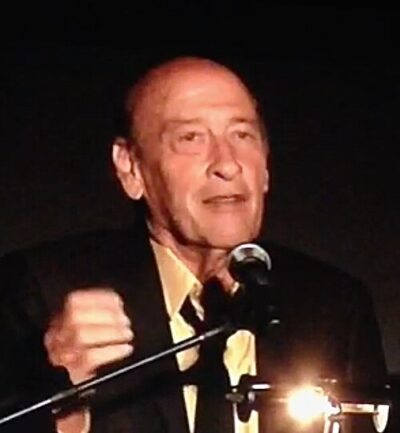
Richard Lester
Richard Lester is an American film director. Born January 19, 1932, in Philadelphia. Known for The Musketeers film trilogy. Educated at William Penn Charter School. Awards include Palme d'Or.
Facts
10 facts · 1 confirmed by two sources · 2 cited · 7 from one source
Where this comes from
Papalocal keeps its own record. It started from these sources; what each one said is kept here as it was copied, so a change on their side never changes this page by itself. Tap one to read its version.
What Wikidata says · copied November 15, 2026 · revision 2568217579
- Described as
- American film director
- Other names
- Richard Lester Liebman
- Born
- January 19, 1932 · 5 references
- Born in
- Philadelphia · 1 reference
- Citizen of
- United States
- Occupation
- film producer; film director; director · 1 reference
- Education
- William Penn Charter School · 1 reference
- Known for
- The Musketeers film trilogy
- Awards
- Palme d'Or (1965)
- Religion
- atheism
- Wikipedias with a page
- 34
Wikidata item Q346508 (wikidata.org/wiki/Q346508), public domain (CC0). Copied November 15, 2026.
What Wikipedia says · copied November 15, 2026 · revision 1385506673
Richard Lester Liebman (born January 19, 1932) is a retired American film director. He spent the majority of his professional life in the United Kingdom and is known for the fast-paced, flamboyant directing he brought to his comedy films, most notably the Beatles' vehicles A Hard Day's Night (1964) and Help! (1965), and The Knack ...and How to Get It (1965).
Originally from Philadelphia, Lester began his career directing television, moving to the United Kingdom in the mid-1950s. He collaborated with Peter Sellers and Spike Milligan on The Goon Show and The Running Jumping & Standing Still Film. After breaking into film directing through his Beatles collaborations, he helmed various productions including A Funny Thing Happened on the Way to the Forum (1966), How I Won the War (1967), Petulia (1968), The Three Musketeers (1973) and its two sequels, Robin and Marian (1976), Butch and Sundance: The Early Days (1979), and the superhero films Superman II (1980) and Superman III (1983).
A two-time BAFTA Award nominee, Lester is an Honorary Associate of London Film School and a BFI Fellow. According to the British Film Institute, "if any single director can encapsulate the popular image of Britain in the Swinging Sixties, then it is probably Richard Lester. With his use of flamboyant cinematic devices and liking for zany humour, he captured the vitality, and sometimes the triviality, of the period more vividly than any other director."
- Born, in its opening lines
- January 19, 1932
From the Wikipedia article “Richard Lester” (en.wikipedia.org/wiki/Richard_Lester), by its contributors, under CC BY-SA 4.0 (creativecommons.org/licenses/by-sa/4.0/). Copied November 15, 2026; not changed.
Confirmed Two sources agree. Cited One source, and it names where it got it. One source One source, without a reference of its own. Sources disagree The sources disagree. We show the best-supported value and keep theirs below.
