
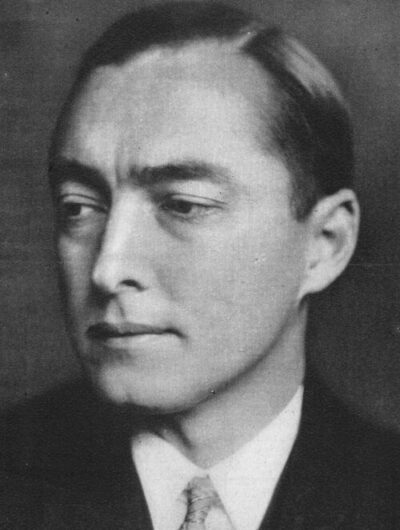
Richard Nikolaus von Coudenhove-Kalergi
Richard Nikolaus von Coudenhove-Kalergi was an Austrian-Japanese politician and philosopher. Born November 16, 1894, in Tokyo City. Died July 27, 1972, in Schruns. Educated at University of Vienna and Theresianum. Awards include Charlemagne Prize, Knight Commander's Cross of the Order of Merit of the Federal Republic of Germany and Grand Officer of the Order of Honour for Services to the Republic of Austria.
Facts
31 facts · 2 confirmed by two sources · 12 cited · 17 from one source
Where this comes from
Papalocal keeps its own record. It started from these sources; what each one said is kept here as it was copied, so a change on their side never changes this page by itself. Tap one to read its version.
What Wikidata says · copied November 16, 2026 · revision 2569140170
- Described as
- Austrian-Japanese politician and philosopher
- Other names
- Count Richard Nikolaus von Coudenhove-Kalergi, Count Richard Nicolas Coudenhove-Kalergi
- Born
- November 16, 1894 · 7 references
- Died
- July 27, 1972 · 6 references
- Born in
- Tokyo City · 2 references
- Died in
- Schruns · 1 reference
- Buried in
- Gruben
- Citizen of
- Austria (–1918); Czechoslovakia (1919–1939); France (1939–)
- Occupation
- politician · 1 reference; writer · 1 reference; philosopher · 1 reference
- Worked for
- New York University
- Education
- University of Vienna; Theresianum
- Awards
- Charlemagne Prize (1950) · 1 reference; Knight Commander's Cross of the Order of Merit of the Federal Republic of Germany; Grand Officer of the Order of Honour for Services to the Republic of Austria (1962); honorary citizen of Frankfurt am Main; Officer of the Legion of Honour (1954); Commander's Cross of the Order of Merit of the Federal Republic of Germany (1972) · 1 reference; Sonning Prize (1965) · 1 reference; Order of the Sacred Treasure, 1st Class (1967)
- Spouse
- Ida Roland (1915–1951) · 1 reference; Melanie Hoffmann (1969–) · 1 reference; Alexandra Bally (1952–1968) · 1 reference
- Father
- Heinrich von Coudenhove-Kalergi · 1 reference
- Mother
- Mitsuko Aoyama · 1 reference
- Siblings
- Gerolf Coudenhove; Ida Friederike Görres; Johannes Coudenhove-Kalergi
- Religion
- Catholicism
- Wikipedias with a page
- 64
Wikidata item Q78525 (wikidata.org/wiki/Q78525), public domain (CC0). Copied November 16, 2026.
What Wikipedia says · copied November 16, 2026 · revision 1383721495
Richard Nikolaus Eijiro, Count of Coudenhove-Kalergi (German: Richard Nikolaus Eijiro Graf von Coudenhove-Kalergi; Japanese: リヒャルト・ニコラウス・栄次郎・クーデンホーフ=カレルギー伯爵, romanized: Richyaruto Nikorausu Eijirō Kūdenhōfu-Karerugī Hakushaku; 16 November 1894 – 27 July 1972), was a politician, philosopher, and count of Coudenhove-Kalergi. A pioneer of European integration, he served as the founding president of the Paneuropean Union for 49 years. His parents were Heinrich von Coudenhove-Kalergi, an Austro-Hungarian diplomat, and Mitsuko Aoyama, the daughter of an oil merchant, antiques-dealer and major landowner in Tokyo. His childhood name in Japan was Eijiro Aoyama (青山 栄次郎). Being a native Austrian-Hungarian citizen, he became a Czechoslovak citizen in 1919 and then took French citizenship from 1939 until his death.
His first book, Pan-Europa, was published in 1923 and contained a membership form for the Pan-Europa movement, which held its first Congress in 1926 in Vienna. In 1927, Aristide Briand was elected honorary president of the Pan-Europa movement. Public figures who attended Pan-Europa congresses included Albert Einstein, Thomas Mann and Sigmund Freud.
Coudenhove-Kalergi was the first recipient of the Charlemagne Prize in 1950. The 1972–1973 academic year at the College of Europe was named in his honour. Coudenhove-Kalergi proposed Beethoven's "Ode to Joy" as the music for the European Anthem. He also proposed a Europe Day, a European postage stamp, and many artifacts for the movement (e.g. badges and pennants).
- Born, in its opening lines
- November 16, 1894
- Died, in its opening lines
- July 27, 1972
From the Wikipedia article “Richard von Coudenhove-Kalergi” (en.wikipedia.org/wiki/Richard_von_Coudenhove-Kalergi), by its contributors, under CC BY-SA 4.0 (creativecommons.org/licenses/by-sa/4.0/). Copied November 16, 2026; not changed.
Confirmed Two sources agree. Cited One source, and it names where it got it. One source One source, without a reference of its own. Sources disagree The sources disagree. We show the best-supported value and keep theirs below.
