
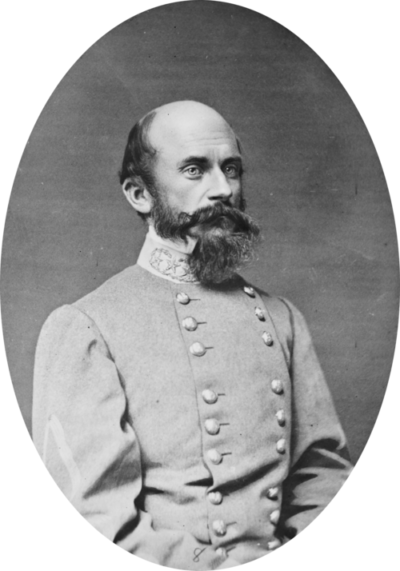
Richard S. Ewell
Richard S. Ewell was a Confederate Army general. Born February 8, 1817, in Georgetown. Died January 25, 1872, in Spring Hill. Educated at United States Military Academy.
Facts
13 facts · 2 confirmed by two sources · 1 cited · 10 from one source
Where this comes from
Papalocal keeps its own record. It started from these sources; what each one said is kept here as it was copied, so a change on their side never changes this page by itself. Tap one to read its version.
What Wikidata says · copied November 15, 2026 · revision 2522050501
- Described as
- Confederate Army general (1817–1872)
- Other names
- Richard Stoddert Ewell, Richard Ewell
- Born
- February 8, 1817 · 2 references
- Died
- January 25, 1872 · 2 references
- Born in
- Georgetown
- Died in
- Spring Hill
- Buried in
- Nashville City Cemetery
- Cause of death
- pneumonia
- Citizen of
- United States
- Occupation
- military personnel
- Education
- United States Military Academy
- Father
- Thomas Ewell · 1 reference
- Mother
- Elizabeth Ewell
- Military branch
- Confederate States Army
- Military rank
- lieutenant general
- Wikipedias with a page
- 25
Wikidata item Q431200 (wikidata.org/wiki/Q431200), public domain (CC0). Copied November 15, 2026.
What Wikipedia says · copied November 15, 2026 · revision 1379814636
Richard Stoddert Ewell (February 8, 1817 – January 25, 1872) was an American military officer and a Confederate general during the American Civil War. He achieved fame as a senior commander under Stonewall Jackson and Robert E. Lee and fought effectively through much of the war. Still, his legacy was clouded by controversies over his actions at the Battle of Gettysburg and the Battle of Spotsylvania Court House.
- Born, in its opening lines
- February 8, 1817
- Died, in its opening lines
- January 25, 1872
From the Wikipedia article “Richard S. Ewell” (en.wikipedia.org/wiki/Richard_S._Ewell), by its contributors, under CC BY-SA 4.0 (creativecommons.org/licenses/by-sa/4.0/). Copied November 15, 2026; not changed.
Confirmed Two sources agree. Cited One source, and it names where it got it. One source One source, without a reference of its own. Sources disagree The sources disagree. We show the best-supported value and keep theirs below.
