
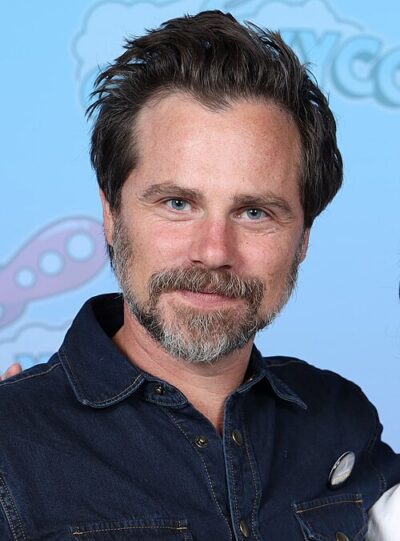
Rider Strong
Rider Strong is an American actor, director and guionist. Born December 11, 1979, in San Francisco. Educated at Columbia University.
Facts
12 facts · 1 confirmed by two sources · 2 cited · 9 from one source
Where this comes from
Papalocal keeps its own record. It started from these sources; what each one said is kept here as it was copied, so a change on their side never changes this page by itself. Tap one to read its version.
What Wikidata says · copied November 16, 2026 · revision 2567683108
- Described as
- American actor, director and guionist
- Other names
- Rider King Strong
- Born
- December 11, 1979 · 3 references
- Born in
- San Francisco · 1 reference
- Citizen of
- United States
- Occupation
- film director; screenwriter; stage actor; film actor; television actor; voice actor; actor · 1 reference
- Education
- Columbia University
- Spouse
- Alexandra Barreto (2013–)
- Wikipedias with a page
- 23
Wikidata item Q725903 (wikidata.org/wiki/Q725903), public domain (CC0). Copied November 16, 2026.
What Wikipedia says · copied November 16, 2026 · revision 1385498819
Rider King Strong (born December 11, 1979) is an American actor and director. He is best known for starring as Shawn Hunter on the ABC sitcom Boy Meets World (1993–2000), which he reprised in its sequel series Girl Meets World (2014–2017). He also headlined the film Cabin Fever (2002) and co-wrote and directed the independent film Irish Twins (2008) with his brother Shiloh. He provided the voices of Brick Flagg in Kim Possible (2002–2004) and Kim Possible Movie: So the Drama (2005), and Tom Lucitor in Star vs. the Forces of Evil (2015–2019). In 2015, Strong was honored with the Young Artist Former Child Star Lifetime Achievement Award.
- Born, in its opening lines
- December 11, 1979
From the Wikipedia article “Rider Strong” (en.wikipedia.org/wiki/Rider_Strong), by its contributors, under CC BY-SA 4.0 (creativecommons.org/licenses/by-sa/4.0/). Copied November 16, 2026; not changed.
Confirmed Two sources agree. Cited One source, and it names where it got it. One source One source, without a reference of its own. Sources disagree The sources disagree. We show the best-supported value and keep theirs below.
