
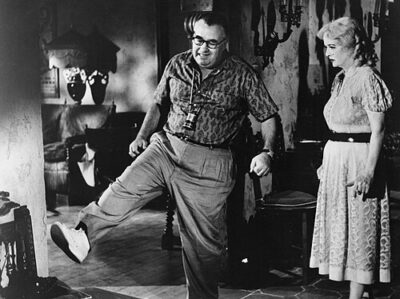
Robert Aldrich
Robert Aldrich was an American film director. Born August 9, 1918, in Cranston. Died December 5, 1983, in Los Angeles. Educated at Moses Brown School and University of Virginia. Awards include Silver Bear for Best Director.
Facts
17 facts · 2 confirmed by two sources · 7 cited · 8 from one source
Where this comes from
Papalocal keeps its own record. It started from these sources; what each one said is kept here as it was copied, so a change on their side never changes this page by itself. Tap one to read its version.
What Wikidata says · copied November 13, 2026 · revision 2568864114
- Described as
- American film director (1918–1983)
- Other names
- Robert Burgess Aldrich
- Born
- August 9, 1918 · 12 references
- Died
- December 5, 1983 · 11 references
- Born in
- Cranston · 1 reference
- Died in
- Los Angeles · 1 reference
- Buried in
- Forest Lawn Memorial Park
- Cause of death
- kidney failure
- Name at birth
- Robert Burgess Aldrich
- Citizen of
- United States
- Occupation
- screenwriter; film producer · 2 references; film director · 2 references; director · 2 references; producer · 1 reference
- Education
- Moses Brown School; University of Virginia · 1 reference
- Awards
- Silver Bear for Best Director (1956) · 1 reference
- Children
- William M. Aldrich
- Wikipedias with a page
- 41
Wikidata item Q95133 (wikidata.org/wiki/Q95133), public domain (CC0). Copied November 13, 2026.
What Wikipedia says · copied November 13, 2026 · revision 1369973551
Robert Burgess Aldrich (August 9, 1918 – December 5, 1983) was an American film director, producer, and screenwriter. An iconoclastic and maverick auteur working in many genres during the Golden Age of Hollywood, he directed mainly films noir, war movies, westerns and dark melodramas with Gothic overtones. His most notable credits include Vera Cruz (1954), Kiss Me Deadly (1955), The Big Knife (1955), Autumn Leaves (1956), Attack (1956), What Ever Happened to Baby Jane? (1962), Hush...Hush, Sweet Charlotte (1964), The Flight of the Phoenix (1965), The Dirty Dozen (1967), and The Longest Yard (1974).
Containing a "macho mise-en-scène and resonant reworkings of classic action genres," Aldrich's films were known for pushing the boundaries of violence in mainstream cinema, as well as for their psychologically complex interpretations of genre film tropes. The British Film Institute wrote that Aldrich's work displays "a subversive sensibility in thrall to the complexities of human behaviour." Several of his films later influenced the French New Wave.
Aside from his directorial work, Aldrich was also noted for his advocacy as a member of the Directors Guild of America, serving as its president for two terms (between 1975 and 1979), and becoming the namesake for its Robert B. Aldrich Achievement Award.
- Born, in its opening lines
- August 9, 1918
- Died, in its opening lines
- December 5, 1983
From the Wikipedia article “Robert Aldrich” (en.wikipedia.org/wiki/Robert_Aldrich), by its contributors, under CC BY-SA 4.0 (creativecommons.org/licenses/by-sa/4.0/). Copied November 13, 2026; not changed.
Confirmed Two sources agree. Cited One source, and it names where it got it. One source One source, without a reference of its own. Sources disagree The sources disagree. We show the best-supported value and keep theirs below.
