
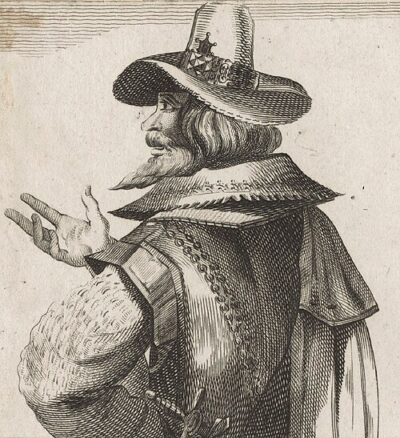
Robert Catesby
Robert Catesby was an English conspirator (died 1605). Born 1573, in Warwickshire. Died November 8, 1605, in Staffordshire.
Facts
12 facts · 1 confirmed by two sources · 2 cited · 8 from one source · 1 where the sources disagree
What’s different
- Born: we show 1573 (Sources disagree). Wikipedia says March 3, 1572
Where this comes from
Papalocal keeps its own record. It started from these sources; what each one said is kept here as it was copied, so a change on their side never changes this page by itself. Tap one to read its version.
What Wikidata says · copied November 16, 2026 · revision 2569611746
- Described as
- English conspirator (died 1605)
- Born
- 1573 · 6 references
- Died
- November 8, 1605 · 4 references
- Born in
- Warwickshire
- Died in
- Staffordshire
- Cause of death
- firearm
- Citizen of
- Kingdom of England
- Occupation
- conspirator
- Spouse
- Katherine Leigh · 1 reference
- Children
- Robert Catesby
- Father
- Sir William Catesby · 1 reference
- Mother
- Anne Throckmorton · 1 reference
- Religion
- Catholicism
- Wikipedias with a page
- 29
Wikidata item Q553864 (wikidata.org/wiki/Q553864), public domain (CC0). Copied November 16, 2026.
What Wikipedia says · copied November 16, 2026 · revision 1383066060
Robert Catesby (3 March 1572 – 8 November 1605) was the leader of a group of English Catholics who planned the failed Gunpowder Plot of 1605. Born in Warwickshire, Catesby was educated at Oxford University. His family were prominent recusant Catholics, and presumably to avoid swearing the Oath of Supremacy he left college before taking his degree. He married a Protestant in 1593 and fathered two children, one of whom survived birth and was baptised in a Protestant church. In 1601 he took part in the Essex Rebellion but was captured and fined, after which he sold his estate at Chastleton.
The Protestant James I, who became King of England in 1603, was less tolerant of Catholics than many persecuted Recusants had hoped. Catesby therefore planned a decapitation strike which he considered tyrannicide, aimed at the Government of England; by blowing up the King and the House of Lords with gunpowder during the State Opening of Parliament. The assassination of the King was to be the prelude to a popular uprising aimed at regime change, through which a Catholic monarch would be seated upon the English throne. Early in 1604, Catesby began to recruit other Catholics to his cause, including Thomas Wintour, John Wright, Thomas Percy, and Guy Fawkes. Over the following months, Fawkes helped to recruit a further eight conspirators into the plot, which, against the pleas of underground Jesuit superior Fr. Henry Garnet to cancel the plot, was scheduled to be carried out on 5 November 1605. Concerns about possible collateral damage caused an anonymous letter of warning to be sent to William Parker, 4th Baron Monteagle, who alerted the authorities. On the night before the planned explosion, Fawkes was arrested underneath the House of Parliament while guarding 38 barrels of gunpowder. News of his arrest caused the other plotters to flee London, warning Catesby along their way.
With a much-diminished group of followers, Catesby made a last stand at Holbeche House in Staffordshire (the modern-day Kingswinford suburb of Wall Heath), against a 200-strong Sheriff's posse led by Richard Walsh. Catesby was mortally wounded by gunfire and later found dead inside Holbeche Hall, where he had died while contemplating a holy card of the Virgin Mary. As a warning to other potential regicides, Catesby's body was exhumed, posthumously executed, and his severed head on a spike was displayed outside the Houses of Parliament.
- Born, in its opening lines
- March 3, 1572
- Died, in its opening lines
- November 8, 1605
From the Wikipedia article “Robert Catesby” (en.wikipedia.org/wiki/Robert_Catesby), by its contributors, under CC BY-SA 4.0 (creativecommons.org/licenses/by-sa/4.0/). Copied November 16, 2026; not changed.
Confirmed Two sources agree. Cited One source, and it names where it got it. One source One source, without a reference of its own. Sources disagree The sources disagree. We show the best-supported value and keep theirs below.
