
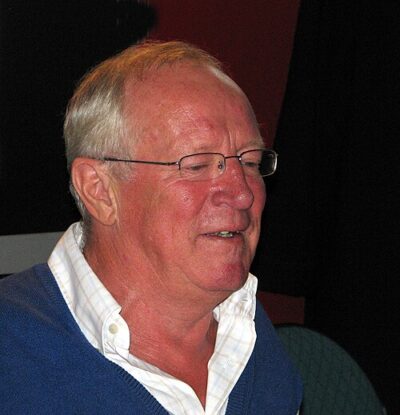
Robert Fisk
Robert Fisk was an English writer and journalist. Born July 12, 1946, in Maidstone. Died October 30, 2020, in Dublin. Educated at Trinity College, Dublin and University of Lancaster. Awards include Jacob's Award, Amnesty International UK Media Award (3 times) and Orwell Prize.
Facts
38 facts · 2 confirmed by two sources · 11 cited · 25 from one source
Where this comes from
Papalocal keeps its own record. It started from these sources; what each one said is kept here as it was copied, so a change on their side never changes this page by itself. Tap one to read its version.
What Wikidata says · copied November 16, 2026 · revision 2558226135
- Described as
- English writer and journalist (1946–2020)
- Born
- July 12, 1946 · 3 references
- Died
- October 30, 2020 · 2 references
- Born in
- Maidstone · 2 references
- Died in
- Dublin · 1 reference
- Cause of death
- stroke
- Citizen of
- United Kingdom
- Occupation
- journalist · 1 reference; historian; writer; war correspondent; author · 1 reference
- Worked for
- Daily Express; The Times; The Independent
- Education
- Trinity College, Dublin; University of Lancaster; Yardley Court; Sutton Valence School
- Member of
- Lonsdale College, Lancaster
- Awards
- Jacob's Award (1991); Amnesty International UK Media Award (3 times) (1992, 1998, 2000); Orwell Prize (1999); Lannan Cultural Freedom Prize (2006); Martha Gellhorn Prize for Journalism (2002) · 1 reference; Honorary doctors of Ghent University (2006) · 1 reference; Premi Godó de Periodisme (2004); honorary doctor of the University of St Andrews (2004); James Cameron Memorial Trust Award (1991); Foreign Reporter of the Year (2 times) (1994, 1995); honorary doctorate of Trinity College, Dublin (2008) · 1 reference; honorary doctorate of Lancaster University (1984); honorary doctor of Queen's University Belfast (2006) · 1 reference; honorary doctor of the University of Kent (2008) · 1 reference; honorary doctorate from the American University of Beirut
- Field
- journalism · 1 reference
- Spouse
- Lara Marlowe (1994–2006); Nelofer Pazira · 1 reference
- Website
- http://www.independent.co.uk/opinion/commentators/fisk/ · 1 reference
- Wikipedias with a page
- 56
Wikidata item Q310900 (wikidata.org/wiki/Q310900), public domain (CC0). Copied November 16, 2026.
What Wikipedia says · copied November 16, 2026 · revision 1383872685
Robert William Fisk (12 July 1946 – 30 October 2020) was an English writer and journalist. He was critical of United States foreign policy in the Middle East, and the Israeli government's treatment of Palestinians.
As an international correspondent, he covered the civil wars in Lebanon, Algeria, and Syria, the Iran–Iraq conflict, the wars in Bosnia and Kosovo, the Soviet invasion of Afghanistan, the Islamic revolution in Iran, Saddam Hussein's invasion of Kuwait, and the U.S. invasion and occupation of Iraq. An Arabic speaker, he was among the few Western journalists to interview Osama bin Laden, which he did three times between 1993 and 1997.
Fisk began his journalistic career at the Newcastle Chronicle and then the Sunday Express. From there, he went to work for The Times as a correspondent in Northern Ireland, Portugal, and the Middle East; in the last role, he based himself in Beirut intermittently from 1976. After 1989, he worked for The Independent. Fisk received many British and international journalism awards, including the Press Awards Foreign Reporter of the Year seven times.
Fisk's books include The Point of No Return (1975), In Time of War (1985), Pity the Nation: Lebanon at War (1990), The Great War for Civilisation: The Conquest of the Middle East (2005), and Syria: Descent Into the Abyss (2015).
The noun fisking (meaning a point-by-point rebuttal) and the related verb fisk were named after him.
- Born, in its opening lines
- July 12, 1946
- Died, in its opening lines
- October 30, 2020
From the Wikipedia article “Robert Fisk” (en.wikipedia.org/wiki/Robert_Fisk), by its contributors, under CC BY-SA 4.0 (creativecommons.org/licenses/by-sa/4.0/). Copied November 16, 2026; not changed.
Confirmed Two sources agree. Cited One source, and it names where it got it. One source One source, without a reference of its own. Sources disagree The sources disagree. We show the best-supported value and keep theirs below.
