
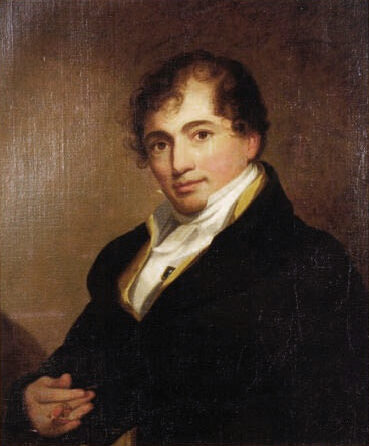
Robert Fulton
Robert Fulton was an American engineer and inventor. Born November 14, 1765, in Little Britain Township. Died February 24, 1815, in New York City. Awards include National Inventors Hall of Fame.
Facts
18 facts · 2 confirmed by two sources · 6 cited · 10 from one source
Where this comes from
Papalocal keeps its own record. It started from these sources; what each one said is kept here as it was copied, so a change on their side never changes this page by itself. Tap one to read its version.
What Wikidata says · copied November 13, 2026 · revision 2561120719
- Described as
- American engineer and inventor (1765–1815)
- Born
- November 14, 1765 · 5 references
- Died
- February 24, 1815 · 5 references
- Born in
- Little Britain Township
- Died in
- New York City · 2 references
- Buried in
- Trinity Church Cemetery
- Cause of death
- tuberculosis
- Citizen of
- United States
- Occupation
- engineer; inventor · 1 reference; painter; scientist; technician · 1 reference
- Member of
- American Antiquarian Society (1814–) · 1 reference
- Awards
- National Inventors Hall of Fame (2006) · 1 reference
- Spouse
- Harriet Livingston Fulton
- Children
- Julia Fulton Blight; Cornelia Livingston Fulton
- Lived in
- New York City · 1 reference
- Wikipedias with a page
- 72
Wikidata item Q192496 (wikidata.org/wiki/Q192496), public domain (CC0). Copied November 13, 2026.
What Wikipedia says · copied November 13, 2026 · revision 1384511237
Robert Fulton (November 14, 1765 – February 24, 1815) was an American engineer and inventor who is widely credited with developing the world's first commercially successful steamboat, the North River Steamboat (also known as Clermont). In 1807, that steamboat traveled on the Hudson River with passengers from New York City to Albany and back again, a round trip of 300 nautical miles (560 kilometers), in 62 hours. The success of his steamboat changed river traffic and trade on major American rivers.
Fulton became interested in steam engines and the idea of steamboats in 1777 when he was around age 12 and visited state delegate William Henry of Lancaster, Pennsylvania, who was interested in this topic. Henry had learned about inventor James Watt and his Watt steam engine on an earlier visit to England. In 1800, Fulton had been commissioned by Napoleon Bonaparte, leader of France, to attempt to design a submarine; he then produced Nautilus, the first practical submarine in history. Fulton is also credited with inventing some of the world's earliest naval torpedoes for use by the Royal Navy.
- Born, in its opening lines
- November 14, 1765
- Died, in its opening lines
- February 24, 1815
From the Wikipedia article “Robert Fulton” (en.wikipedia.org/wiki/Robert_Fulton), by its contributors, under CC BY-SA 4.0 (creativecommons.org/licenses/by-sa/4.0/). Copied November 13, 2026; not changed.
Confirmed Two sources agree. Cited One source, and it names where it got it. One source One source, without a reference of its own. Sources disagree The sources disagree. We show the best-supported value and keep theirs below.
