
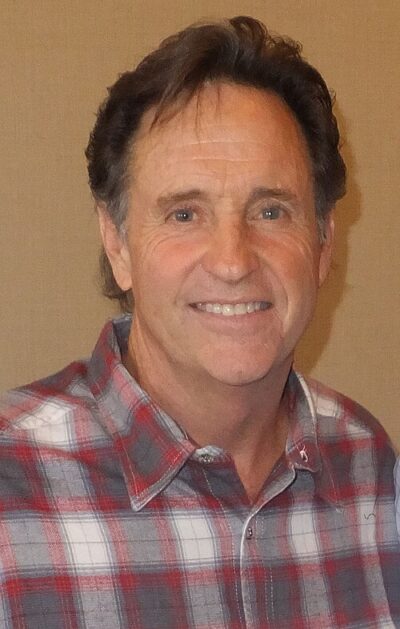
Robert Hays
Robert Hays is an American actor. Born July 24, 1947, in Bethesda. Educated at Bellevue East High School and Grossmont College.
Facts
14 facts · 1 confirmed by two sources · 2 cited · 11 from one source
Where this comes from
Papalocal keeps its own record. It started from these sources; what each one said is kept here as it was copied, so a change on their side never changes this page by itself. Tap one to read its version.
What Wikidata says · copied November 16, 2026 · revision 2539526101
- Described as
- American actor
- Born
- July 24, 1947 · 3 references
- Born in
- Bethesda
- Citizen of
- United States
- Occupation
- film actor · 1 reference; television actor; voice actor; actor · 1 reference; film director; film producer
- Education
- Bellevue East High School · 1 reference; Grossmont College; San Diego State University
- Spouse
- Cherie Currie (1990–1997)
- Children
- Jake Hays
- Wikipedias with a page
- 24
Wikidata item Q1970920 (wikidata.org/wiki/Q1970920), public domain (CC0). Copied November 16, 2026.
What Wikipedia says · copied November 16, 2026 · revision 1380977706
Robert Hays (born July 24, 1947) is an American actor, known for a variety of television and film roles since the 1970s. He came to prominence around 1980, co-starring in the two-season domestic sitcom Angie, and playing the central role of pilot Ted Striker in the comedy film Airplane! and its sequel. Other film roles include the lead role in the comedy Take This Job and Shove It (1981), and Bob Seaver, one of the main human characters in Homeward Bound: The Incredible Journey (1993). On television, he starred in the science fiction series Starman (1986–1987) and the short-lived workplace sitcom FM (1989–1990), voiced Iron Man in Iron Man (1994), and had a guest role as Bud Hyde on That '70s Show (2000).
- Born, in its opening lines
- July 24, 1947
From the Wikipedia article “Robert Hays” (en.wikipedia.org/wiki/Robert_Hays), by its contributors, under CC BY-SA 4.0 (creativecommons.org/licenses/by-sa/4.0/). Copied November 16, 2026; not changed.
Confirmed Two sources agree. Cited One source, and it names where it got it. One source One source, without a reference of its own. Sources disagree The sources disagree. We show the best-supported value and keep theirs below.
