
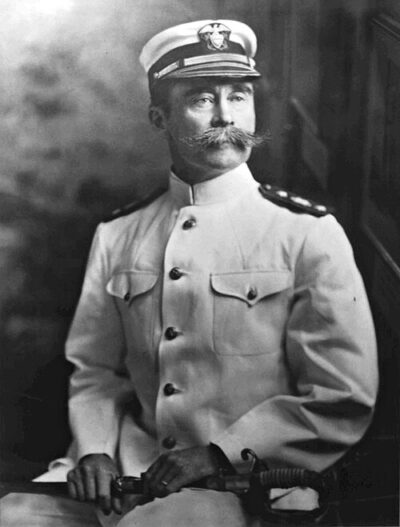
Robert Peary
Robert Peary was an explorer from the United States. Born May 6, 1856, in Cresson. Died February 20, 1920, in Washington, D.C.. Educated at Bowdoin College and Portland High School. Awards include Patron’s Medal, Grande Médaille d'Or des Explorations and Cullum Geographical Medal.
Facts
29 facts · 2 confirmed by two sources · 15 cited · 12 from one source
Where this comes from
Papalocal keeps its own record. It started from these sources; what each one said is kept here as it was copied, so a change on their side never changes this page by itself. Tap one to read its version.
What Wikidata says · copied November 13, 2026 · revision 2568756946
- Described as
- explorer from the United States (1856–1920)
- Other names
- Robert Edwin Peary, Robert E. Peary
- Born
- May 6, 1856 · 12 references
- Died
- February 20, 1920 · 11 references
- Born in
- Cresson · 2 references
- Died in
- Washington, D.C. · 3 references
- Buried in
- Arlington National Cemetery · 1 reference
- Citizen of
- United States
- Occupation
- explorer; military officer; researcher · 1 reference; science fiction writer · 1 reference; botanical collector · 1 reference
- Education
- Bowdoin College; Portland High School
- Member of
- Phi Beta Kappa Society
- Awards
- Patron’s Medal (1898) · 1 reference; Grande Médaille d'Or des Explorations (1914) · 1 reference; Cullum Geographical Medal (1896) · 1 reference; Charles P. Daly Medal (1902) · 1 reference; Hubbard Medal (1906); Grand Officer of the Legion of Honour (1913) · 1 reference; Livingstone Medal (1903) · 1 reference
- Field
- polar region
- Spouse
- Josephine Diebitsch Peary · 1 reference
- Children
- Marie Ahnighito Peary · 1 reference; Robert Peary Jr.
- Father
- Charles Nutter Peary · 1 reference
- Mother
- Mary Webster Wiley Peary · 1 reference
- Military branch
- United States Navy
- Military rank
- admiral
- Wikipedias with a page
- 65
Wikidata item Q186585 (wikidata.org/wiki/Q186585), public domain (CC0). Copied November 13, 2026.
What Wikipedia says · copied November 13, 2026 · revision 1383741182
Robert Edwin Peary (; May 6, 1856 – February 20, 1920) was an American explorer and officer in the United States Navy who made several expeditions to the Arctic in the late 19th and early 20th centuries. He was long credited as being the discoverer of the geographic North Pole in April 1909, having led the first expedition to have claimed this achievement, although it is now considered unlikely that he actually reached the Pole.
Peary was born in Cresson, Pennsylvania, but, following his father's death at a young age, was raised in Cape Elizabeth, Maine. He attended Bowdoin College, then joined the United States Coast and Geodetic Survey as a draftsman. He enlisted in the navy in 1881 as a civil engineer. In 1885, he was made chief of surveying for the Nicaragua Canal, which was never built. He visited the Arctic for the first time in 1886, making an unsuccessful attempt to cross Greenland by dogsled. In the Peary expedition to Greenland of 1891–1892, he was much better prepared, and by reaching Independence Fjord in what is now known as Peary Land, he proved conclusively that Greenland was an island. He was one of the first Arctic explorers to study Inuit survival techniques. During an expedition in 1894, he was the first Western explorer to reach the Cape York meteorite and its fragments, which were then taken from the native Inuit population who had relied on it for creating tools. During that expedition, Peary deceived six indigenous individuals, including Minik Wallace, into traveling to the United States with him by promising they would be able to return with tools, weapons and gifts within the year. This promise was unfulfilled and four of the six Inuit died of illnesses within a few months.
On his 1898–1902 expedition, Peary set a new "Farthest North" record by reaching Greenland's northernmost point, Cape Morris Jesup. Peary made two more expeditions to the Arctic, in 1905–1906 and in 1908–1909. During the latter, he claimed to have reached the North Pole. Peary received several learned society awards during his lifetime, and, in 1911, received the Thanks of Congress and was promoted to rear admiral. He served two terms as president of the Explorers Club before retiring in 1911.
Peary's claim to have reached the North Pole was widely debated along with a competing claim made by Frederick Cook, but eventually won widespread acceptance. In 1989, British explorer Wally Herbert concluded Peary did not reach the pole, although he may have come within 60 mi (97 km).
- Born, in its opening lines
- May 6, 1856
- Died, in its opening lines
- February 20, 1920
From the Wikipedia article “Robert Peary” (en.wikipedia.org/wiki/Robert_Peary), by its contributors, under CC BY-SA 4.0 (creativecommons.org/licenses/by-sa/4.0/). Copied November 13, 2026; not changed.
Confirmed Two sources agree. Cited One source, and it names where it got it. One source One source, without a reference of its own. Sources disagree The sources disagree. We show the best-supported value and keep theirs below.
