
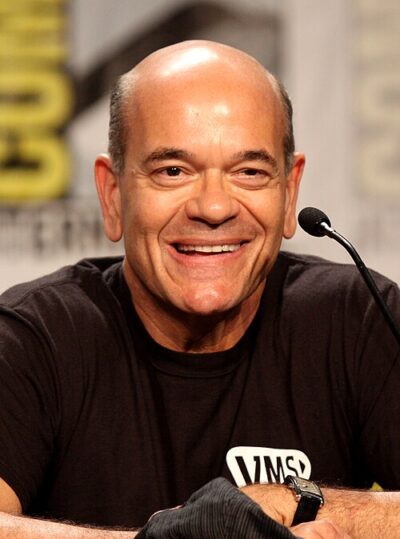
Robert Picardo
Robert Picardo is an American actor. Born October 27, 1953, in Philadelphia. Educated at Yale University and Circle in the Square Theatre School.
Facts
15 facts · 1 confirmed by two sources · 2 cited · 12 from one source
Where this comes from
Papalocal keeps its own record. It started from these sources; what each one said is kept here as it was copied, so a change on their side never changes this page by itself. Tap one to read its version.
What Wikidata says · copied November 15, 2026 · revision 2567675442
- Described as
- American actor
- Other names
- Robert Alphonse Picardo
- Born
- October 27, 1953 · 4 references
- Born in
- Philadelphia · 1 reference
- Citizen of
- United States
- Occupation
- television actor; singer; film director; actor · 1 reference; film actor; screenwriter · 1 reference
- Education
- Yale University; Circle in the Square Theatre School; William Penn Charter School · 1 reference
- Instrument
- voice
- Lived in
- Los Angeles
- Website
- https://www.robertpicardo.com/ (2025)
- Wikipedias with a page
- 39
Wikidata item Q313789 (wikidata.org/wiki/Q313789), public domain (CC0). Copied November 15, 2026.
What Wikipedia says · copied November 15, 2026 · revision 1380497364
Robert Alphonse Picardo (born October 27, 1953) is an American actor. He is best known for playing The Doctor in the Star Trek franchise, starting on Star Trek: Voyager. He also appeared as Richard Woolsey in the Stargate franchise, the Cowboy in Innerspace, Coach Cutlip on The Wonder Years, and Captain Dick Richard on the ABC series China Beach. He is a frequent collaborator with Joe Dante and is a member of The Planetary Society's board of directors.
- Born, in its opening lines
- October 27, 1953
From the Wikipedia article “Robert Picardo” (en.wikipedia.org/wiki/Robert_Picardo), by its contributors, under CC BY-SA 4.0 (creativecommons.org/licenses/by-sa/4.0/). Copied November 15, 2026; not changed.
Confirmed Two sources agree. Cited One source, and it names where it got it. One source One source, without a reference of its own. Sources disagree The sources disagree. We show the best-supported value and keep theirs below.
