
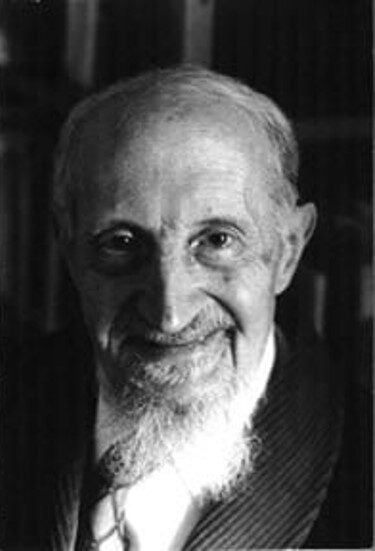
Roberto Assagioli
Roberto Assagioli was an Italian psychiatrist and pioneer. Born February 27, 1888, in Venice. Died August 23, 1974, in Capolona. Educated at University of Florence.
Facts
13 facts · 2 confirmed by two sources · 1 cited · 10 from one source
Where this comes from
Papalocal keeps its own record. It started from these sources; what each one said is kept here as it was copied, so a change on their side never changes this page by itself. Tap one to read its version.
What Wikidata says · copied November 18, 2026 · revision 2553946218
- Described as
- Italian psychiatrist and pioneer (1888-1974)
- Born
- February 27, 1888 · 2 references
- Died
- August 23, 1974 · 2 references
- Born in
- Venice
- Died in
- Capolona
- Name at birth
- Roberto Marco Grego
- Citizen of
- Italy (1946–); Kingdom of Italy (–1946)
- Occupation
- psychiatrist; psychologist · 1 reference; author
- Education
- University of Florence (–1910)
- Lived in
- Venice (1888–1904); Florence (1904–)
- Wikipedias with a page
- 22
Wikidata item Q724752 (wikidata.org/wiki/Q724752), public domain (CC0). Copied November 18, 2026.
What Wikipedia says · copied November 18, 2026 · revision 1362485409
Roberto Assagioli (27 February 1888 – 23 August 1974) was an Italian psychiatrist in the fields of humanistic and transpersonal psychology. Assagioli founded the psychological movement known as psychosynthesis, which is still being developed today by therapists and psychologists who practice the psychological methods and techniques he developed.
Assagioli's published work in English includes four books and many monographs published as pamphlets as well as numerous lectures and papers in Italian that remain unpublished but which are being translated into English and posted online.[1] His approach to psychosynthesis emphasized the possibility of progressive integration (that is, synthesis) of the personality, as well as the integration of the personality with the Higher Self from which it is derived.
“Psychosynthesis is a dynamic conception of psychic life as a struggle between a multiplicity of disparate, often conflicting forces, and a unifying Center that aims to master and harmoniously organize them.”[2]
In addition, Assagioli's work has been shown to be effectively applicable in such fields as psychotherapy and treatment, medicine, education, organizational development, community development, spiritual life, and personal self-improvement.
Author Piero Ferrucci has said, “As far as I know, Roberto Assagioli is the only individual who has participated personally and actively in the unfurling of two distinct and fundamental revolutions in twentieth-century psychology. The first revolution was the birth of psychoanalysis and depth psychology in the beginning of the century: Assagioli, then a young medical student, presented his MD dissertation on psychoanalysis, wrote in the official Jahrbuch side by side with Freud and Jung, and was part of the Zurich Freud Society, the group of early psychoanalytical pioneers. The idea of unconscious processes in the mind made a lasting impression on him, an impression which he later developed into a variety of hypotheses well beyond the boundaries of orthodox psychoanalysis.
The second revolution in which Assagioli participated was the creation of humanistic and transpersonal psychology in the 1960’s. A. H. Maslow was the pioneer of these new developments. The main idea was simple: rather than focusing on pathology in order to define the human being (as psychoanalysis had all too often done), or on the structural similarities between the human and the animal nervous system (as behaviorism suggested), the humanistic and transpersonal point of view, while not denying the findings of the other schools, put the main emphasis on the organism’s striving for wholeness, on the human being’s potential for growth, expansion of consciousness, health, love and joy.”
- Born, in its opening lines
- February 27, 1888
- Died, in its opening lines
- August 23, 1974
From the Wikipedia article “Roberto Assagioli” (en.wikipedia.org/wiki/Roberto_Assagioli), by its contributors, under CC BY-SA 4.0 (creativecommons.org/licenses/by-sa/4.0/). Copied November 18, 2026; not changed.
Confirmed Two sources agree. Cited One source, and it names where it got it. One source One source, without a reference of its own. Sources disagree The sources disagree. We show the best-supported value and keep theirs below.
