
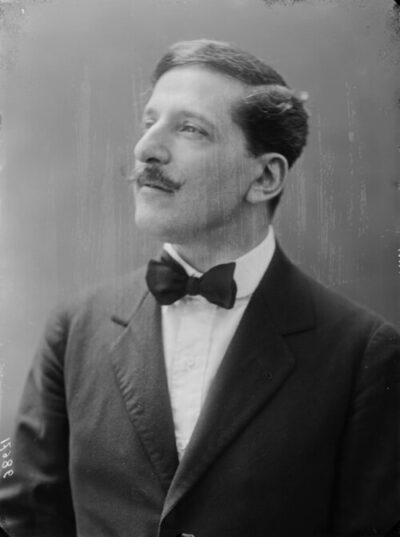
Roberto Bracco
Roberto Bracco was an Italian writer. Born November 10, 1861, in Naples. Died April 20, 1943, in Sorrento. Positions held include member of the Chamber of Deputies of the Kingdom of Italy.
Facts
14 facts · 2 confirmed by two sources · 8 cited · 4 from one source
Where this comes from
Papalocal keeps its own record. It started from these sources; what each one said is kept here as it was copied, so a change on their side never changes this page by itself. Tap one to read its version.
What Wikidata says · copied November 18, 2026 · revision 2550622025
- Described as
- Italian writer (1861-1943)
- Born
- November 10, 1861 · 3 references
- Died
- April 20, 1943 · 3 references
- Born in
- Naples · 3 references
- Died in
- Sorrento · 3 references
- Citizen of
- Kingdom of Italy
- Occupation
- writer · 2 references; journalist · 1 reference; screenwriter; politician · 1 reference; theatre critic · 1 reference; playwright · 2 references; critic · 1 reference
- Positions held
- member of the Chamber of Deputies of the Kingdom of Italy
- Political party
- Unione Nazionale · 1 reference
- Wikipedias with a page
- 20
Wikidata item Q3938639 (wikidata.org/wiki/Q3938639), public domain (CC0). Copied November 18, 2026.
What Wikipedia says · copied November 18, 2026 · revision 1352651522
Roberto Bracco (1861–1943) was an Italian playwright, screenwriter and journalist. A number of his plays were turned into films, and he worked on the scripts of several of them including the 1914 silent Lost in the Dark. He was nominated for the Nobel Prize in Literature six times.
Also among his works is Un Perfetto Amore, a dramatic dialogue in three acts.
- Born, in its opening lines
- 1861
- Died, in its opening lines
- 1943
From the Wikipedia article “Roberto Bracco” (en.wikipedia.org/wiki/Roberto_Bracco), by its contributors, under CC BY-SA 4.0 (creativecommons.org/licenses/by-sa/4.0/). Copied November 18, 2026; not changed.
Confirmed Two sources agree. Cited One source, and it names where it got it. One source One source, without a reference of its own. Sources disagree The sources disagree. We show the best-supported value and keep theirs below.
