
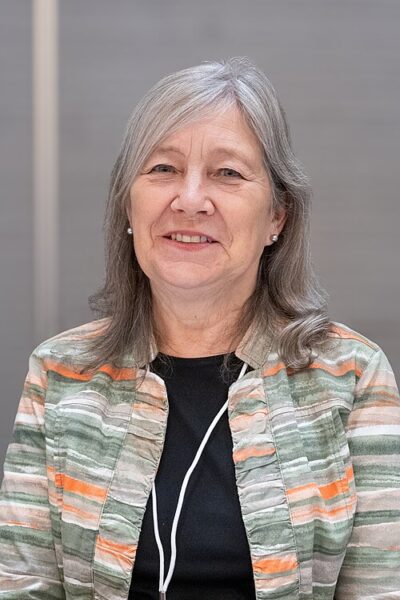
Robin Hobb
Robin Hobb is an American fiction writer (pseudonym). Born March 5, 1952, in Berkeley. Known for Assassin's Apprentice, Royal Assassin and Assassin's Quest. Educated at University of Denver. Awards include Inkpot Award, Geffen Award and World Fantasy Award for Life Achievement.
Facts
20 facts · 1 confirmed by two sources · 13 cited · 6 from one source
Where this comes from
Papalocal keeps its own record. It started from these sources; what each one said is kept here as it was copied, so a change on their side never changes this page by itself. Tap one to read its version.
What Wikidata says · copied November 15, 2026 · revision 2563536621
- Described as
- American fiction writer (pseudonym) (born 1952)
- Other names
- Margaret Astrid Lindholm Ogden, Megan Lindholm, Margaret Astrid Lindholm
- Born
- March 5, 1952 · 5 references
- Born in
- Berkeley · 1 reference
- Name at birth
- Margaret Astrid Lindholm · 1 reference
- Citizen of
- United States · 1 reference
- Occupation
- writer · 2 references; novelist; science fiction writer
- Education
- University of Denver
- Genre
- fantasy · 1 reference
- Known for
- Assassin's Apprentice · 1 reference; Royal Assassin · 1 reference; Assassin's Quest · 1 reference
- Awards
- Inkpot Award (2017) · 1 reference; Geffen Award (2019) · 1 reference; World Fantasy Award for Life Achievement (2021) · 2 references; Imaginales award for best foreign-language novel (2007) · 1 reference
- Field
- speculative fiction · 2 references
- Spouse
- Fred Ogden · 1 reference
- Website
- http://www.robinhobb.com/; http://meganlindholm.com/
- Wikipedias with a page
- 38
Wikidata item Q234403 (wikidata.org/wiki/Q234403), public domain (CC0). Copied November 15, 2026.
What Wikipedia says · copied November 15, 2026 · revision 1383255524
Margaret Astrid Lindholm Ogden (née Lindholm; born March 5, 1952), known by her pen names Robin Hobb and Megan Lindholm, is an American writer of speculative fiction. As Hobb, she is best known for her fantasy novels set in the Realm of the Elderlings, which comprise the Farseer, Liveship Traders and Tawny Man trilogies, the Rain Wild Chronicles, and the Fitz and the Fool trilogy. Lindholm's writing includes the urban fantasy novel Wizard of the Pigeons and science fiction short stories, among other works. As of 2018, her fiction has been translated into 22 languages and sold more than 4 million copies.
Born in California, Lindholm grew up in Alaska and the Pacific Northwest and married a mariner at age 18. The Alaskan wilderness and the ocean were prominent aspects of her life, influencing her writing. After an early career in short fiction, at age 30, Lindholm published her first novel while working as a waitress and raising children. The first work to bring her recognition was the 1986 novel Wizard of the Pigeons, a liminal fantasy set in Seattle. A forerunner of the urban fantasy genre, it received praise for Lindholm's depiction of understated magic and poverty. Her science fiction novella "A Touch of Lavender" was nominated for the Hugo and Nebula Awards. While critically well received, Lindholm's work did not sell well; she began writing under the pen name Robin Hobb in 1995.
Hobb achieved commercial success with her debut work under this pseudonym, the Farseer trilogy. An epic fantasy told as a first-person retrospective, it has been described as a character-driven and introspective work. Hobb went on to write four further series set in the Realm of the Elderlings, which received praise from critics for her characterization, and in 2005 The Times described her as "one of the great modern fantasy writers". Through her writing, Hobb explores otherness, ecocentrism, queerness, and gender as themes. She concluded the Elderlings series in 2017 and won the World Fantasy Award—Life Achievement in 2021.
- Born, in its opening lines
- March 5, 1952
From the Wikipedia article “Robin Hobb” (en.wikipedia.org/wiki/Robin_Hobb), by its contributors, under CC BY-SA 4.0 (creativecommons.org/licenses/by-sa/4.0/). Copied November 15, 2026; not changed.
Confirmed Two sources agree. Cited One source, and it names where it got it. One source One source, without a reference of its own. Sources disagree The sources disagree. We show the best-supported value and keep theirs below.
