
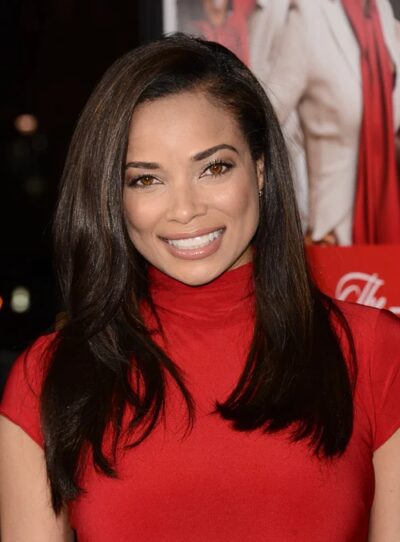
Rochelle Aytes
Rochelle Aytes is an American actress. Born May 17, 1976, in New York City. Educated at State University of New York at Purchase.
Facts
9 facts · 0 confirmed by two sources · 1 cited · 8 from one source
Where this comes from
Papalocal keeps its own record. It started from these sources; what each one said is kept here as it was copied, so a change on their side never changes this page by itself. Tap one to read its version.
What Wikidata says · copied November 15, 2026 · revision 2552606368
- Described as
- American actress
- Born
- May 17, 1976
- Born in
- New York City
- Citizen of
- United States
- Occupation
- actor · 1 reference; television actor; model; voice actor; film actor · 1 reference
- Education
- State University of New York at Purchase
- Wikipedias with a page
- 30
Wikidata item Q2376800 (wikidata.org/wiki/Q2376800), public domain (CC0). Copied November 15, 2026.
What Wikipedia says · copied November 15, 2026 · revision 1384464954
Rochelle Aytes is an American actress and model. She is best known for her role as April Malloy on the ABC drama series Mistresses (2013–16) and as the voice of Rochelle in the critically acclaimed video game Left 4 Dead 2 (2009). Aytes also starred in the auto-biography story film of TLC titled CrazySexyCool: The TLC Story as Perri "Pebbles" Reid, short-lived series Drive and The Forgotten (2009–10), as well as Criminal Minds and Work It. In film, Aytes has appeared in White Chicks, Madea's Family Reunion and Trick 'r Treat. Aytes also had a recurring role as Agent Greer, an ex-CIA officer, on the CBS television series Hawaii Five-0. From 2019 to 2024, Aytes played Nichelle Carmichael in the CBS action series S.W.A.T.. Since 2025, she has portrayed Dr. Mary Morstan in the CBS mystery-medical drama series Watson.
From the Wikipedia article “Rochelle Aytes” (en.wikipedia.org/wiki/Rochelle_Aytes), by its contributors, under CC BY-SA 4.0 (creativecommons.org/licenses/by-sa/4.0/). Copied November 15, 2026; not changed.
Confirmed Two sources agree. Cited One source, and it names where it got it. One source One source, without a reference of its own. Sources disagree The sources disagree. We show the best-supported value and keep theirs below.
