
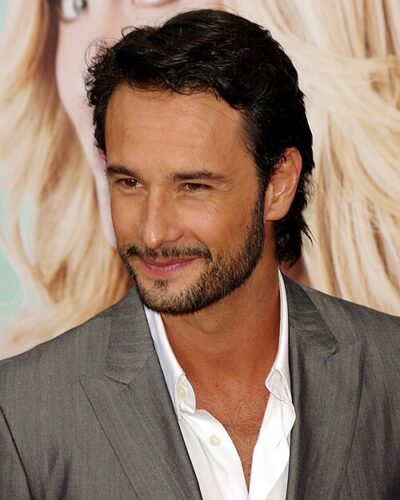
Rodrigo Santoro
Rodrigo Santoro is a Brazilian actor. Born August 22, 1975, in Petrópolis. Educated at Pontifical Catholic University of Rio de Janeiro. Awards include Cinema Brazil Grand Prize for Best Actor and Trophée Chopard.
Facts
14 facts · 1 confirmed by two sources · 3 cited · 10 from one source
Where this comes from
Papalocal keeps its own record. It started from these sources; what each one said is kept here as it was copied, so a change on their side never changes this page by itself. Tap one to read its version.
What Wikidata says · copied November 16, 2026 · revision 2563142443
- Described as
- Brazilian actor
- Other names
- Rodrigo Junqueira Reis Santoro, Rodrigo Junqueira dos Reis Santoro
- Born
- August 22, 1975
- Born in
- Petrópolis
- Name at birth
- Rodrigo Junqueira dos Reis Santoro · 2 references
- Citizen of
- Brazil
- Occupation
- actor · 1 reference; film actor; television actor; film producer
- Education
- Pontifical Catholic University of Rio de Janeiro
- Awards
- Cinema Brazil Grand Prize for Best Actor; Trophée Chopard
- Spouse
- Mel Fronckowiak (2016–) · 1 reference
- Lived in
- Rio de Janeiro; Los Angeles
- Wikipedias with a page
- 48
Wikidata item Q294819 (wikidata.org/wiki/Q294819), public domain (CC0). Copied November 16, 2026.
What Wikipedia says · copied November 16, 2026 · revision 1384660147
Rodrigo Junqueira Reis Santoro (Portuguese pronunciation: [ʁoˈdɾiɡu ʒũˈkejɾɐ ˈʁejs sɐ̃ˈtɔɾu]; born 22 August 1975) is a Brazilian actor. He is known in Brazil for his appearances on local telenovelas, and internationally for his portrayal of the Persian king Xerxes I in the film 300 (2006) and its sequel 300: Rise of an Empire (2014). Other credits include Brainstorm (2001), Carandiru (2003), Love Actually (2003), Che (2008), I Love You Phillip Morris (2009), and Rio (2011), What to Expect When You’re Expecting (2012). He also appeared on the television series Lost in 2006, portraying the character Paulo, and on HBO's Westworld (2016–2020).
- Born, in its opening lines
- August 22, 1975
From the Wikipedia article “Rodrigo Santoro” (en.wikipedia.org/wiki/Rodrigo_Santoro), by its contributors, under CC BY-SA 4.0 (creativecommons.org/licenses/by-sa/4.0/). Copied November 16, 2026; not changed.
Confirmed Two sources agree. Cited One source, and it names where it got it. One source One source, without a reference of its own. Sources disagree The sources disagree. We show the best-supported value and keep theirs below.
