
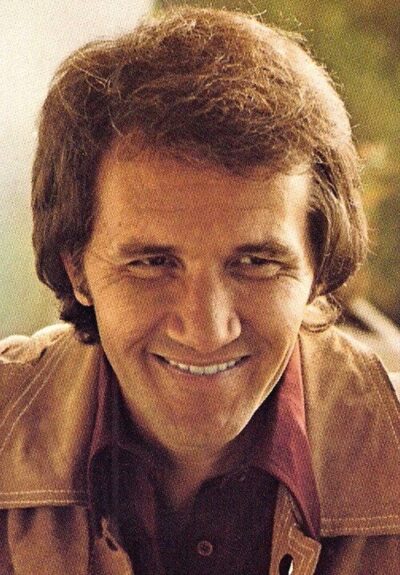
Roger Miller
Roger Miller was an American country musician. Born January 2, 1936, in Fort Worth. Died October 25, 1992, in Los Angeles. Awards include Oklahoma Music Hall of Fame, Tony Award for Best Original Score and Grammy Award for Best Country Song (2 times).
Facts
33 facts · 2 confirmed by two sources · 9 cited · 21 from one source · 1 where the sources disagree
What’s different
- Cause of death: we show esophageal cancer (Sources disagree). Wikidata also lists lung cancer and laryngeal cancer
Where this comes from
Papalocal keeps its own record. It started from these sources; what each one said is kept here as it was copied, so a change on their side never changes this page by itself. Tap one to read its version.
What Wikidata says · copied November 16, 2026 · revision 2563873112
- Described as
- American country musician (1936–1992)
- Other names
- Roger Dean Miller
- Born
- January 2, 1936 · 9 references
- Died
- October 25, 1992 · 6 references
- Born in
- Fort Worth · 2 references
- Died in
- Los Angeles · 2 references
- Cause of death
- esophageal cancer; lung cancer; laryngeal cancer
- Name at birth
- Roger Dean Miller
- Citizen of
- United States
- Occupation
- singer; singer-songwriter; composer · 3 references; lyricist · 3 references; actor; recording artist; musician · 1 reference; bandleader · 1 reference
- Genre
- country music · 1 reference
- Instrument
- fiddle; guitar; percussion instrument; voice
- Record label
- RCA Records; Columbia Records
- Awards
- Oklahoma Music Hall of Fame (2004) · 1 reference; Tony Award for Best Original Score (1985) · 1 reference; Grammy Award for Best Country Song (2 times) (1964, 1965); Grammy Award for Best New Country & Western Artist (1964); Grammy Award for Best Country & Western Recording (2 times) (1964, 1965); Nashville Songwriters Hall of Fame (1973); Drama Desk Award for Outstanding Lyrics (1985); Country Music Hall of Fame and Museum (1995)
- Children
- Dean Miller
- Military branch
- United States Army
- Website
- https://www.rogermiller.com/
- Wikipedias with a page
- 22
Wikidata item Q712359 (wikidata.org/wiki/Q712359), public domain (CC0). Copied November 16, 2026.
What Wikipedia says · copied November 16, 2026 · revision 1373119185
Roger Dean Miller Sr. (January 2, 1936 – October 25, 1992) was an American singer-songwriter, widely known for his honky-tonk-influenced novelty songs and his chart-topping country hits "King of the Road", "Dang Me", and "England Swings".
After growing up in Oklahoma and serving in the U.S. Army, Miller began his musical career as a songwriter in the late 1950s, writing such hits as "Billy Bayou" and "Home" for Jim Reeves and "Invitation to the Blues" for Ray Price. He later began a recording career and reached the peak of his fame in the mid-1960s, continuing to record and tour into the 1990s, charting his final top-20 country hit "Old Friends" with Price and Willie Nelson in 1982. He also wrote and performed several of the songs for the 1973 Disney animated film Robin Hood. Later in his life, he wrote the music and lyrics for the 1985 Tony Award−winning Broadway musical Big River, in which he played Pap Finn in 1986.
Miller died from lung cancer in 1992, and was inducted into the Country Music Hall of Fame three years later. He was also inducted into the Oklahoma Music Hall of Fame in 2005. His songs continued to be recorded by other singers, with covers of "Tall, Tall Trees" by Alan Jackson and "Husbands and Wives" by Brooks and Dunn; both reached the number-one spot on country charts in the 1990s. The Roger Miller Museum — now closed — in his home town of Erick, Oklahoma, was a tribute to Miller.
- Born, in its opening lines
- January 2, 1936
- Died, in its opening lines
- October 25, 1992
From the Wikipedia article “Roger Miller” (en.wikipedia.org/wiki/Roger_Miller), by its contributors, under CC BY-SA 4.0 (creativecommons.org/licenses/by-sa/4.0/). Copied November 16, 2026; not changed.
Confirmed Two sources agree. Cited One source, and it names where it got it. One source One source, without a reference of its own. Sources disagree The sources disagree. We show the best-supported value and keep theirs below.
