
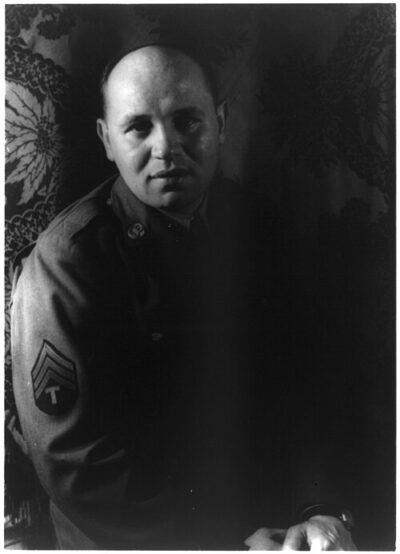
Romare Bearden
Romare Bearden was an African American artist. Born September 2, 1911, in Charlotte. Died March 12, 1988, in New York City. Known for Untitled ("City of Light"). Educated at Art Students League of New York and Steinhardt School of Culture, Education, and Human Development. Awards include National Medal of Arts, North Carolina Award for Fine Arts and North Carolina Award.
Facts
30 facts · 2 confirmed by two sources · 14 cited · 14 from one source
Where this comes from
Papalocal keeps its own record. It started from these sources; what each one said is kept here as it was copied, so a change on their side never changes this page by itself. Tap one to read its version.
What Wikidata says · copied November 18, 2026 · revision 2554569789
- Described as
- African American artist (1911–1988)
- Other names
- Romy Bearden, Romare Howard Bearden, Rommie Bearden, Romare H. Bearden
- Born
- September 2, 1911 · 5 references
- Died
- March 12, 1988 · 6 references
- Born in
- Charlotte · 2 references
- Died in
- New York City · 2 references
- Citizen of
- United States · 1 reference
- Occupation
- writer; painter · 2 references; draftsperson · 1 reference; collagist · 1 reference; printmaker · 1 reference; musician; calligrapher · 1 reference
- Education
- Art Students League of New York; Steinhardt School of Culture, Education, and Human Development; Peabody High School; DeWitt Clinton High School
- Member of
- Spiral · 1 reference; 372nd Infantry Regiment; American Academy of Arts and Letters; 306 Group
- Genre
- genre art · 1 reference; social-artistic project · 1 reference
- Known for
- Untitled ("City of Light") · 1 reference
- Awards
- National Medal of Arts; North Carolina Award for Fine Arts (1976) · 1 reference; North Carolina Award (1976) · 1 reference; Guggenheim Fellowship · 1 reference
- Spouse
- Nanette Bearden · 1 reference
- Mother
- Bessye J. Bearden
- Lived in
- New York City
- Wikipedias with a page
- 16
Wikidata item Q1291679 (wikidata.org/wiki/Q1291679), public domain (CC0). Copied November 18, 2026.
What Wikipedia says · copied November 18, 2026 · revision 1382279491
Romare Howard Bearden (, ROH-mə-ree) (September 2, 1911 – March 12, 1988) was an American artist, author, and songwriter. He worked with many types of media including cartoons, oils, and collages. Born in Charlotte, North Carolina, Bearden grew up in New York City and Pittsburgh, Pennsylvania, and graduated from New York University in 1935.
He began his artistic career creating scenes of the American South. Later, he worked to express the humanity he felt was lacking in the world after his experience in the US Army during World War II on the European front. He returned to Paris in 1950 and studied art history and philosophy at the Sorbonne.
Bearden's early work focused on unity and cooperation within the African-American community. After a period during the 1950s when he painted more abstractly, the theme re-emerged in his collage works of the 1960s. The New York Times described Bearden as "the nation's foremost collagist" in his 1988 obituary. Bearden became a founding member of the Harlem-based art group known as Spiral, formed to discuss the responsibility of the African-American artist in the civil rights movement.
Bearden was the author or coauthor of several books. He also was a songwriter, known as co-writer of the jazz classic "Sea Breeze", which was recorded by Billy Eckstine, a former high school classmate at Peabody High School, and Dizzy Gillespie. Bearden had long supported young, emerging artists and he and his wife established the Bearden Foundation to continue this work, as well as to support young scholars. In 1987, Bearden was awarded the National Medal of Arts.
- Born, in its opening lines
- September 2, 1911
- Died, in its opening lines
- March 12, 1988
From the Wikipedia article “Romare Bearden” (en.wikipedia.org/wiki/Romare_Bearden), by its contributors, under CC BY-SA 4.0 (creativecommons.org/licenses/by-sa/4.0/). Copied November 18, 2026; not changed.
Confirmed Two sources agree. Cited One source, and it names where it got it. One source One source, without a reference of its own. Sources disagree The sources disagree. We show the best-supported value and keep theirs below.
