
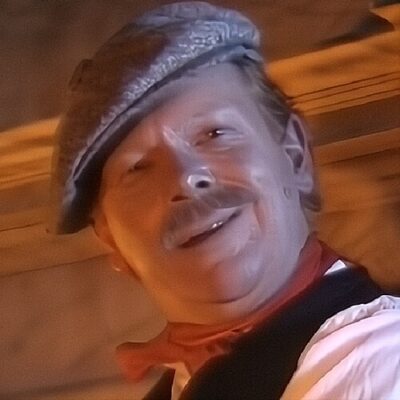
Ronald Lacey
Ronald Lacey was a British actor. Born September 28, 1935, in Harrow. Died May 15, 1991, in London. Educated at London Academy of Music and Dramatic Art.
Facts
14 facts · 2 confirmed by two sources · 1 cited · 10 from one source · 1 where the sources disagree
What’s different
- Cause of death: we show liver cancer (Sources disagree). Wikidata also lists liver failure
Where this comes from
Papalocal keeps its own record. It started from these sources; what each one said is kept here as it was copied, so a change on their side never changes this page by itself. Tap one to read its version.
What Wikidata says · copied November 18, 2026 · revision 2561078925
- Described as
- British actor (1935–1991)
- Other names
- Ronald William Lacey
- Born
- September 28, 1935 · 3 references
- Died
- May 15, 1991 · 3 references
- Born in
- Harrow
- Died in
- London
- Cause of death
- liver cancer; liver failure
- Name at birth
- Ronald William Lacey
- Citizen of
- United Kingdom
- Occupation
- character actor; stage actor; film actor; television actor · 1 reference; actor · 1 reference
- Education
- London Academy of Music and Dramatic Art
- Children
- Rebecca Lacey
- Wikipedias with a page
- 20
Wikidata item Q1381935 (wikidata.org/wiki/Q1381935), public domain (CC0). Copied November 18, 2026.
What Wikipedia says · copied November 18, 2026 · revision 1363550552
Ronald William Lacey (28 September 1935 – 15 May 1991) was an English actor. He made numerous television and film appearances over a 30-year period. His roles included Harris in Porridge (1977), Frankie in the Bud Spencer comedy Charleston (1978), SD agent Sturmbannführer Arnold Ernst Toht in Raiders of the Lost Ark (1981) and the Bishop of Bath and Wells in Blackadder II (1986).
- Born, in its opening lines
- September 28, 1935
- Died, in its opening lines
- May 15, 1991
From the Wikipedia article “Ronald Lacey” (en.wikipedia.org/wiki/Ronald_Lacey), by its contributors, under CC BY-SA 4.0 (creativecommons.org/licenses/by-sa/4.0/). Copied November 18, 2026; not changed.
Confirmed Two sources agree. Cited One source, and it names where it got it. One source One source, without a reference of its own. Sources disagree The sources disagree. We show the best-supported value and keep theirs below.
