
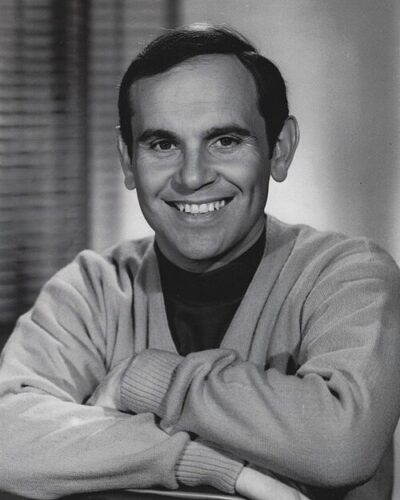
Ronnie Schell
Ronnie Schell was an American actor, comedian and cartoon voice actor. Born December 23, 1931, in Richmond. Died June 12, 2026, in Los Angeles. Educated at San Francisco State University.
Facts
11 facts · 2 confirmed by two sources · 3 cited · 6 from one source
Where this comes from
Papalocal keeps its own record. It started from these sources; what each one said is kept here as it was copied, so a change on their side never changes this page by itself. Tap one to read its version.
What Wikidata says · copied November 18, 2026 · revision 2566743567
- Described as
- American actor, comedian and cartoon voice actor (1931-2026)
- Other names
- Ronald Ralph Schell
- Born
- December 23, 1931 · 1 reference
- Died
- June 12, 2026 · 1 reference
- Born in
- Richmond · 1 reference
- Died in
- Los Angeles · 1 reference
- Citizen of
- United States
- Occupation
- actor · 1 reference; television actor; voice actor; film actor; comedian
- Education
- San Francisco State University
- Wikipedias with a page
- 16
Wikidata item Q5852710 (wikidata.org/wiki/Q5852710), public domain (CC0). Copied November 18, 2026.
What Wikipedia says · copied November 18, 2026 · revision 1359601331
Ronald Ralph Schell (December 23, 1931 – June 12, 2026) was an American actor and stand-up comedian. He appeared on the May 28, 1959, episode of the TV quiz show You Bet Your Life, hosted by Groucho Marx. Schell demonstrated a comic barrage of beatnik jive talk. As a stand-up comedian, he first developed his act at the hungry i nightclub in San Francisco, California, and is heard (presumably as the opening act) introducing the Kingston Trio at the start of the group's 1962 College Concert album. Schell is probably best known for his 1960s television role as Duke Slater in Gomer Pyle – USMC.
- Born, in its opening lines
- December 23, 1931
- Died, in its opening lines
- June 12, 2026
From the Wikipedia article “Ronnie Schell” (en.wikipedia.org/wiki/Ronnie_Schell), by its contributors, under CC BY-SA 4.0 (creativecommons.org/licenses/by-sa/4.0/). Copied November 18, 2026; not changed.
Confirmed Two sources agree. Cited One source, and it names where it got it. One source One source, without a reference of its own. Sources disagree The sources disagree. We show the best-supported value and keep theirs below.
