
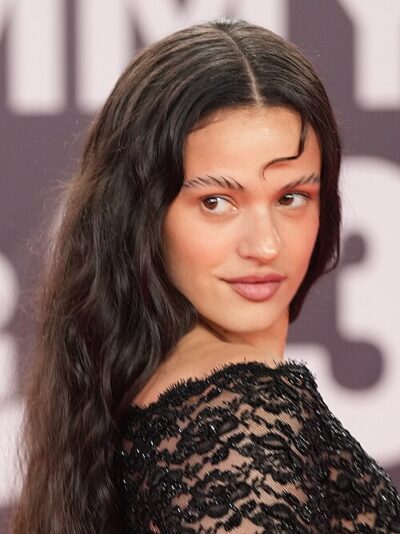
Rosalía
Rosalía is a Spanish singer-songwriter. Born September 25, 1992, in Sant Esteve Sesrovires. Known for El Mal Querer, Con altura and Motomami. Educated at Catalonia College of Music. Awards include Latin Grammy Award for Best Alternative Song, Latin Grammy Award for Best Urban Fusion/Performance (2 times) and City of Barcelona Award.
Facts
39 facts · 1 confirmed by two sources · 11 cited · 27 from one source
Where this comes from
Papalocal keeps its own record. It started from these sources; what each one said is kept here as it was copied, so a change on their side never changes this page by itself. Tap one to read its version.
What Wikidata says · copied November 16, 2026 · revision 2562884418
- Described as
- Spanish singer-songwriter (born 1992)
- Other names
- Rosalía Vila Tobella
- Born
- September 25, 1992 · 1 reference
- Born in
- Sant Esteve Sesrovires · 3 references
- Name at birth
- Rosalía Vila Tobella · 2 references
- Citizen of
- Spain
- Occupation
- singer-songwriter; composer · 1 reference; singer · 1 reference; musician · 1 reference
- Education
- Catalonia College of Music
- Member of
- Kejaleo
- Genre
- Latin pop; new flamenco; avant-garde; reggaeton; folk music; flamenco
- Instrument
- voice; palmas; piano · 1 reference; guitar · 1 reference
- Record label
- Universal Music Spain, S.L. (2016–2018) · 1 reference; Columbia Records (2018–)
- Known for
- El Mal Querer; Con altura; Motomami
- Awards
- Latin Grammy Award for Best Alternative Song (2018); Latin Grammy Award for Best Urban Fusion/Performance (2 times) (2018, 2020); City of Barcelona Award (2018) · 1 reference; Latin Grammy Award for Album of the Year (2 times) (2019, 2022); Latin Grammy Award for Best Contemporary Pop Vocal Album (2019); Latin Grammy Award for Best Urban Song (2 times) (2019, 2020); Grammy Award for Best Latin Rock or Alternative Album (2020) · 1 reference; Latin Grammy Award for Best Short Form Music Video (2020) · 1 reference; Latin Grammy Award for Best Alternative Music Album (2022) · 1 reference; Latin Grammy Award for Best Recording Package (2022) · 1 reference; List of most influential women in Catalonia (2 times) (2025, 2026) · 1 reference; Billboard Latin Music Hall of Fame (2026)
- Lived in
- Sant Esteve Sesrovires
- Website
- https://rosalia.com
- Wikipedias with a page
- 57
Wikidata item Q28843759 (wikidata.org/wiki/Q28843759), public domain (CC0). Copied November 16, 2026.
What Wikipedia says · copied November 16, 2026 · revision 1385950508
Rosalía Vila Tobella (born 25 September 1992), known mononymously as Rosalía (Spanish: [rosaˈli.a]), is a Spanish singer-songwriter and actress. She has been described as an "atypical pop star" due to her genre-bending musical style. After being enthralled by Spanish folk music at age 14, she studied musicology at the Catalonia College of Music and graduated in 2017.
She completed her studies with honours by virtue of her debut and collaborative cover album with Raül Refree, Los Ángeles (2017), and her baccalaureate second album El mal querer (2018). Reimagining flamenco by mixing it with pop and hip-hop music, it spawned the singles "Malamente" and "Pienso en tu mirá", which caught the attention of the Spanish public, and were released to critical acclaim. A recipient of the Latin Grammy Award for Album of the Year and listed in Rolling Stone's 500 Greatest Albums of All Time, El mal querer started the ascent of Rosalía into the international music scene. Rosalía explored urbano music with her 2019 releases "Con altura" and "Yo x ti, tú x mí", achieving global success. She gave reggaeton an experimental twist on her third studio album Motomami (2022), departing from the new flamenco sound of its predecessor. The album caught international attention with its singles "La Fama", "Saoko", and "Despechá", to become the best reviewed album of the year on Metacritic. Her fourth album Lux (2025) broke several all-time records by a Spanish-speaking female artist and was widely acclaimed by critics for its ambitious fusion of art pop and classical elements.
In the course of her career, Rosalía has accumulated thirteen number-ones in her home country, the most for a local female artist. She has also won two Grammy Awards, sixteen Latin Grammy Awards (including three Album of the Year wins and one Song of the Year), a BRIT Award, four MTV Video Music Awards, two MTV Europe Music Awards, three UK Music Video Awards, an Ivor Novello Award and two Premio Ruido awards, among others. In 2019, Billboard gave her the Rising Star Award for "changing the sound of today's mainstream music with her fresh flamenco-influenced pop", and became the first Spanish-singing act in history to be nominated for Best New Artist at the Grammys. In 2026, Rosalía was named Woman of the Year at the Billboard Latin Women in Music and inducted into the Billboard Latin Music Hall of Fame. She is widely considered one of the most successful and influential Spanish singers of all time.
- Born, in its opening lines
- September 25, 1992
From the Wikipedia article “Rosalía” (en.wikipedia.org/wiki/Rosalía), by its contributors, under CC BY-SA 4.0 (creativecommons.org/licenses/by-sa/4.0/). Copied November 16, 2026; not changed.
Confirmed Two sources agree. Cited One source, and it names where it got it. One source One source, without a reference of its own. Sources disagree The sources disagree. We show the best-supported value and keep theirs below.
