
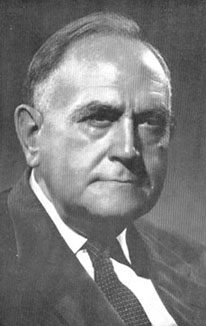
Roy Welensky
Roy Welensky was a Northern Rhodesian politician. Born January 20, 1907, in Harare. Died December 5, 1991, in Blandford Forum. Positions held include Prime Minister of the Federation of Rhodesia and Nyasaland (1956–1963), Member of the National Assembly of Zambia and Defence minister of Rhodesia (1956–1959). Awards include Knight Commander of the Order of St Michael and St George and Knight Bachelor.
Facts
25 facts · 2 confirmed by two sources · 1 cited · 22 from one source
Where this comes from
Papalocal keeps its own record. It started from these sources; what each one said is kept here as it was copied, so a change on their side never changes this page by itself. Tap one to read its version.
What Wikidata says · copied November 18, 2026 · revision 2562771103
- Described as
- Northern Rhodesian politician (1907–1991)
- Other names
- Sir Roy Welensky
- Born
- January 20, 1907 · 3 references
- Died
- December 5, 1991 · 3 references
- Born in
- Harare
- Died in
- Blandford Forum
- Buried in
- Kinson Cemetery · 1 reference
- Citizen of
- United Kingdom; Southern Rhodesia; Northern Rhodesia; Federation of Rhodesia and Nyasaland
- Occupation
- train driver; trade unionist; boxer; politician; engineer
- Positions held
- Prime Minister of the Federation of Rhodesia and Nyasaland (1956–1963); Member of the National Assembly of Zambia; Defence minister of Rhodesia (1956–1959)
- Political party
- United Federal Party; Northern Rhodesian Labour Party
- Worked for
- National Railways of Zimbabwe
- Member of
- Rhodesian Railway Workers' Union
- Sport
- boxing
- Awards
- Knight Commander of the Order of St Michael and St George; Knight Bachelor
- Field
- politician
- Wikipedias with a page
- 21
Wikidata item Q367456 (wikidata.org/wiki/Q367456), public domain (CC0). Copied November 18, 2026.
What Wikipedia says · copied November 18, 2026 · revision 1380477134
Sir Roland "Roy" Welensky (né Raphael Welensky; 20 January 1907 – 5 December 1991) was a Northern Rhodesian politician and the second and last Prime Minister of the Federation of Rhodesia and Nyasaland.
Born in Salisbury, Southern Rhodesia (now Harare, Zimbabwe) to an Afrikaner mother and a Lithuanian Jewish father, he moved to Northern Rhodesia, became involved with the trade unions, and entered the colonial legislative council in 1938. There, he campaigned for the amalgamation of Northern and Southern Rhodesia (the latter under white self-government, the former under the colonial office). Although unsuccessful, he succeeded in the formation of the Federation of Rhodesia and Nyasaland, a state within the British Empire that sought to retain predominant power for the white minority while moving in a progressive political direction, in contrast to South Africa under the apartheid system.
Becoming Prime Minister of the Federation in 1956, Welensky opposed British moves towards black majority rule, and he used force to suppress politically motivated violence in the territories. After the advent of black majority rule in two of the Federation's three territories (Northern Rhodesia and Nyasaland, now Zambia and Malawi, respectively), the Federation collapsed in 1963. Welensky retired to Salisbury, where he re-entered politics and attempted to stop Rhodesia (formerly Southern Rhodesia) from unilaterally declaring itself independent. Following the end of white minority rule in 1979, and the recognised independence of Rhodesia as the Republic of Zimbabwe under Robert Mugabe in 1980, Welensky emigrated to the United Kingdom, where he died in England in 1991. A fervent admirer of Britain and its Empire, Welensky described himself as "half Jewish, half Afrikaner [and] 100% British".
- Born, in its opening lines
- January 20, 1907
- Died, in its opening lines
- December 5, 1991
From the Wikipedia article “Roy Welensky” (en.wikipedia.org/wiki/Roy_Welensky), by its contributors, under CC BY-SA 4.0 (creativecommons.org/licenses/by-sa/4.0/). Copied November 18, 2026; not changed.
Confirmed Two sources agree. Cited One source, and it names where it got it. One source One source, without a reference of its own. Sources disagree The sources disagree. We show the best-supported value and keep theirs below.
