
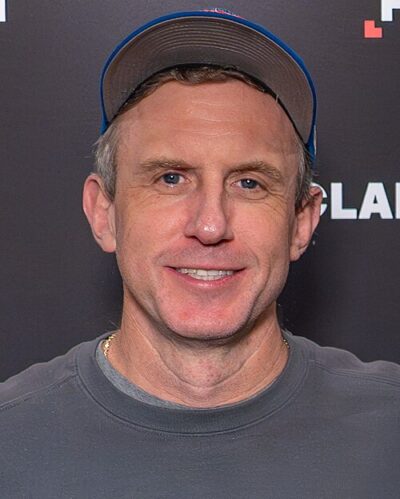
Ruben Fleischer
Ruben Fleischer is an American film director. Born October 31, 1974, in Washington, D.C.. Educated at Wesleyan University and Georgetown Day School.
Facts
11 facts · 1 confirmed by two sources · 4 cited · 6 from one source
Where this comes from
Papalocal keeps its own record. It started from these sources; what each one said is kept here as it was copied, so a change on their side never changes this page by itself. Tap one to read its version.
What Wikidata says · copied November 15, 2026 · revision 2546549304
- Described as
- American film director
- Other names
- Ruben Samuel Fleischer
- Born
- October 31, 1974 · 1 reference
- Born in
- Washington, D.C.
- Citizen of
- United States
- Occupation
- film director; film producer · 1 reference; screenwriter · 2 references; director · 1 reference
- Education
- Wesleyan University; Georgetown Day School
- Field
- film direction · 1 reference; film production · 1 reference
- Wikipedias with a page
- 38
Wikidata item Q521691 (wikidata.org/wiki/Q521691), public domain (CC0). Copied November 15, 2026.
What Wikipedia says · copied November 15, 2026 · revision 1375285361
Ruben Samuel Fleischer (; born October 31, 1974) is an American film director, film producer, television producer, music video director, and commercial director. He is best known as the director of Zombieland (2009), his first feature film, and its sequel Zombieland: Double Tap (2019). He has also directed the films 30 Minutes or Less, Gangster Squad, Uncharted, and 2018's Venom featuring the Marvel Comics character of the same name. Prior to features, he directed television commercials for such brands as Cisco, Eurostar, ESPN, and Burger King, and music videos for artists such as M.I.A., Electric Six, DJ Format and Gold Chains.
- Born, in its opening lines
- October 31, 1974
From the Wikipedia article “Ruben Fleischer” (en.wikipedia.org/wiki/Ruben_Fleischer), by its contributors, under CC BY-SA 4.0 (creativecommons.org/licenses/by-sa/4.0/). Copied November 15, 2026; not changed.
Confirmed Two sources agree. Cited One source, and it names where it got it. One source One source, without a reference of its own. Sources disagree The sources disagree. We show the best-supported value and keep theirs below.
