
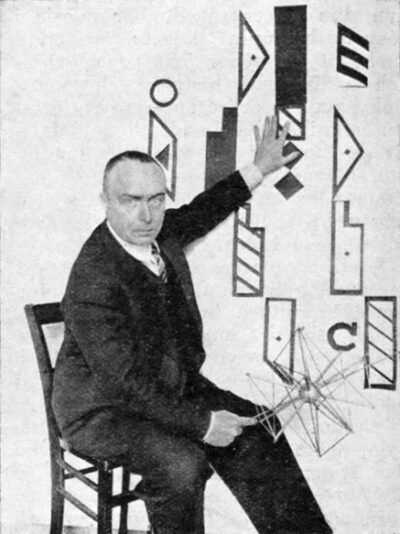
Rudolf Laban
Rudolf Laban was an Austrian choreographer. Born December 15, 1879, in Bratislava. Died July 1, 1958, in Weybridge. Educated at Beaux-Arts de Paris.
Facts
17 facts · 2 confirmed by two sources · 10 cited · 5 from one source
Where this comes from
Papalocal keeps its own record. It started from these sources; what each one said is kept here as it was copied, so a change on their side never changes this page by itself. Tap one to read its version.
What Wikidata says · copied November 16, 2026 · revision 2566147275
- Described as
- Austrian choreographer (1879-1958)
- Other names
- Rudolf Jean-Baptiste Attila von Laban, Rudolph Laban, Rudolf Jean-Baptiste Attila Laban, Rudolf von Laban
- Born
- December 15, 1879 · 12 references
- Died
- July 1, 1958 · 13 references
- Born in
- Bratislava · 2 references
- Died in
- Weybridge · 2 references
- Buried in
- Weybridge Cemetery · 1 reference
- Citizen of
- Hungary · 1 reference
- Occupation
- choreographer · 1 reference; ballet dancer; dancer · 1 reference; theatrologist · 1 reference
- Education
- Beaux-Arts de Paris
- Field
- choreography · 1 reference
- Children
- Azra von Laban; André Perrottet von Laban; Juana de Laban · 1 reference
- Religion
- Catholicism · 1 reference
- Lived in
- England (1938–) · 1 reference
- Wikipedias with a page
- 47
Wikidata item Q213712 (wikidata.org/wiki/Q213712), public domain (CC0). Copied November 16, 2026.
What Wikipedia says · copied November 16, 2026 · revision 1383106693
Rudolf (von) Laban, also known as Rudolph von Laban (Hungarian: Lábán Rudolf; 15 December 1879 – 1 July 1958), was an Austro-Hungarian dance artist, choreographer, and movement theorist. He is considered a "founding father of expressionist dance" and a pioneer of modern dance. His theoretical innovations included Laban movement analysis (a way of documenting human movement) and Labanotation (a movement notation system), which paved the way for further developments in dance notation and movement analysis. He initiated one of the main approaches to dance therapy. His work on theatrical movement has also been influential. He attempted to apply his ideas to several other fields, including architecture, education, industry, and management.
Following a dress rehearsal of Laban's last choral work, Of the Warm Wind and New Joy, which he had prepared for the 1936 Summer Olympics in Berlin, Joseph Goebbels cancelled the piece after which time Laban fell out of favor with the National Socialist government. He eventually left Germany for England in 1937 after four years of working with the Nazi regime. Between 1945 and 1946, he and his long-term collaborator and former student Lisa Ullmann founded the Laban Art of Movement Guild in London, and the Art of Movement Studio in Manchester, where he worked until his death. The Trinity Laban Conservatoire of Music and Dance in London has continued this legacy.
- Born, in its opening lines
- December 15, 1879
- Died, in its opening lines
- July 1, 1958
From the Wikipedia article “Rudolf von Laban” (en.wikipedia.org/wiki/Rudolf_von_Laban), by its contributors, under CC BY-SA 4.0 (creativecommons.org/licenses/by-sa/4.0/). Copied November 16, 2026; not changed.
Confirmed Two sources agree. Cited One source, and it names where it got it. One source One source, without a reference of its own. Sources disagree The sources disagree. We show the best-supported value and keep theirs below.
