
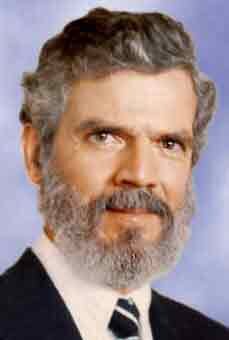
Rudolph Rummel
Rudolph Rummel was an American academic. Born October 21, 1932, in Cleveland. Died March 2, 2014, in Kaneohe. Educated at Northwestern University and University of Hawaiʻi at Mānoa. Awards include Susan Strange Award.
Facts
16 facts · 2 confirmed by two sources · 5 cited · 9 from one source
Where this comes from
Papalocal keeps its own record. It started from these sources; what each one said is kept here as it was copied, so a change on their side never changes this page by itself. Tap one to read its version.
What Wikidata says · copied November 18, 2026 · revision 2569755984
- Described as
- American academic (1932–2014)
- Other names
- Rudolph Joseph Rummel, R. J. Rummel, Rummel's law
- Born
- October 21, 1932 · 1 reference
- Died
- March 2, 2014 · 1 reference
- Born in
- Cleveland · 1 reference
- Died in
- Kaneohe · 1 reference
- Citizen of
- United States
- Occupation
- political scientist · 1 reference; historian; university teacher; statistician · 1 reference
- Worked for
- Yale University; Indiana University · 1 reference; University of Hawaiʻi at Mānoa · 1 reference
- Education
- Northwestern University (–1963) · 1 reference; University of Hawaiʻi at Mānoa
- Awards
- Susan Strange Award (1999) · 1 reference
- Siblings
- JoAnn Marie Tenorio
- Wikipedias with a page
- 18
Wikidata item Q334918 (wikidata.org/wiki/Q334918), public domain (CC0). Copied November 18, 2026.
What Wikipedia says · copied November 18, 2026 · revision 1372623720
Rudolph Joseph Rummel (October 21, 1932 – March 2, 2014) was an American political scientist, a statistician and professor at Indiana University, Yale University, and University of Hawaiʻi at Mānoa. He spent his career studying data on collective violence and war with a view toward helping their resolution or elimination. Contrasting genocide, Rummel coined the term democide for murder by government, such as the genocide of indigenous peoples and colonialism, Nazi Germany, the Stalinist purges, Mao Zedong's Cultural Revolution, and other authoritarian, totalitarian, or undemocratic regimes, coming to the conclusion that democratic regimes result in the least democides.
Rummel estimated that a total of 212 million people were killed by all governments during the 20th century, of which 148 million were killed by Communist governments from 1917 to 1987. To give some perspective on these numbers, Rummel stated that all domestic and foreign wars during the 20th century killed in combat around 41 million. His figures for Communist governments have been criticized for the methodology which he used to arrive at them, and they have also been criticized for being higher than the figures which have been given by most scholars. In his last book, Rummel increased his estimate to over 272 million innocent, non-combatant civilians who were murdered by their own governments during the 20th century. Rummel stated that his 272 million death estimate was his lower, more prudent figure, stating that it "could be over 400,000,000." Rummel came to the conclusion that a democracy is the form of government which is least likely to kill its citizens because democracies do not tend to wage wars against each other. This latest view is a concept, which was further developed by Rummel, known as the democratic peace theory.
Rummel was the author of twenty-four scholarly books, and he published his major results between 1975 and 1981 in Understanding Conflict and War (1975). He spent the next fifteen years refining the underlying theory and testing it empirically on new data, against the empirical results of others, and on case studies. He summed up his research in Power Kills (1997). His other works include Lethal Politics: Soviet Genocides and Mass Murders 1917–1987 (1990), China's Bloody Century: Genocide and Mass Murder Since 1900 (1991), Democide: Nazi Genocide and Mass Murder (1992), Death by Government: Genocide and Mass Murder Since 1900 (1994), and Statistics of Democide (1997). Extracts, figures, and tables from the books, including his sources and details regarding the calculations, are available online on his website. Rummel also authored Applied Factor Analysis (1970) and Understanding Correlation (1976).
- Born, in its opening lines
- October 21, 1932
- Died, in its opening lines
- March 2, 2014
From the Wikipedia article “R. J. Rummel” (en.wikipedia.org/wiki/R._J._Rummel), by its contributors, under CC BY-SA 4.0 (creativecommons.org/licenses/by-sa/4.0/). Copied November 18, 2026; not changed.
Confirmed Two sources agree. Cited One source, and it names where it got it. One source One source, without a reference of its own. Sources disagree The sources disagree. We show the best-supported value and keep theirs below.
