
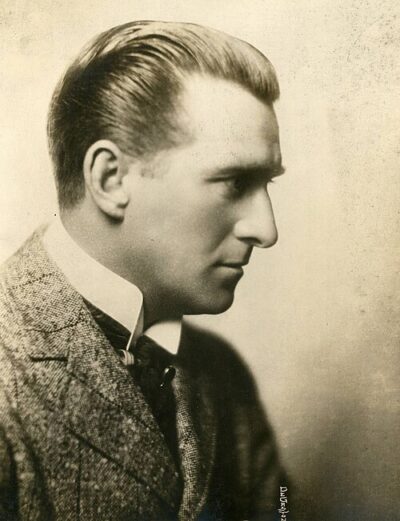
Rupert Julian
Rupert Julian was a Hollywood Director and Actor. Born January 25, 1879, in Whangaroa. Died December 27, 1943, in Hollywood.
Facts
14 facts · 2 confirmed by two sources · 3 cited · 9 from one source
Where this comes from
Papalocal keeps its own record. It started from these sources; what each one said is kept here as it was copied, so a change on their side never changes this page by itself. Tap one to read its version.
What Wikidata says · copied November 16, 2026 · revision 2552874585
- Described as
- Hollywood Director and Actor (1879-1943)
- Born
- January 25, 1879 · 2 references
- Died
- December 27, 1943 · 2 references
- Born in
- Whangaroa
- Died in
- Hollywood
- Buried in
- Forest Lawn Memorial Park
- Cause of death
- stroke
- Citizen of
- United States; New Zealand
- Occupation
- actor · 2 references; film director · 1 reference; screenwriter; film producer; film actor; director · 2 references
- Wikipedias with a page
- 22
Wikidata item Q1369749 (wikidata.org/wiki/Q1369749), public domain (CC0). Copied November 16, 2026.
What Wikipedia says · copied November 16, 2026 · revision 1385799942
Rupert Julian (born Thomas Percival Hayes; 25 January 1879 – 27 December 1943) was a New Zealand cinema actor, director, writer and producer. During his career, Julian directed 60 films and acted in over 90 films. He is best remembered for directing Lon Chaney in The Phantom of the Opera (1925). He also directed The Cat Creeps (1930), a sound remake of The Cat and the Canary (1927), which is now considered a lost film, with only two minutes of footage remaining in the 1932 Universal comedy short film Boo!.
- Born, in its opening lines
- January 25, 1879
- Died, in its opening lines
- December 27, 1943
From the Wikipedia article “Rupert Julian” (en.wikipedia.org/wiki/Rupert_Julian), by its contributors, under CC BY-SA 4.0 (creativecommons.org/licenses/by-sa/4.0/). Copied November 16, 2026; not changed.
Confirmed Two sources agree. Cited One source, and it names where it got it. One source One source, without a reference of its own. Sources disagree The sources disagree. We show the best-supported value and keep theirs below.
