
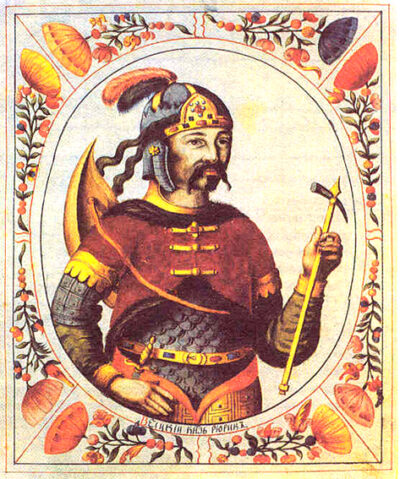
Rurik
Rurik was a Varangian chieftain (c. 830-879). Born 830. Died 879, in Veliky Novgorod. Positions held include Grand Prince of Novgorod (862–879).
Facts
11 facts · 0 confirmed by two sources · 4 cited · 7 from one source
Where this comes from
Papalocal keeps its own record. It started from these sources; what each one said is kept here as it was copied, so a change on their side never changes this page by itself. Tap one to read its version.
What Wikidata says · copied November 16, 2026 · revision 2569134467
- Described as
- Varangian chieftain (c. 830-879)
- Other names
- Riurik, Roderick, Ryurik
- Born
- 830 · 1 reference
- Died
- 879 · 3 references
- Died in
- Veliky Novgorod
- Occupation
- monarch
- Positions held
- Grand Prince of Novgorod (862–879)
- Spouse
- Efanda · 1 reference
- Children
- Igor of Kiev · 4 references
- Mother
- Umila · 1 reference
- Siblings
- Sineus; Truvor
- Religion
- paganism
- Wikipedias with a page
- 70
Wikidata item Q7990 (wikidata.org/wiki/Q7990), public domain (CC0). Copied November 16, 2026.
What Wikipedia says · copied November 16, 2026 · revision 1359678145
Rurik (also spelled Rorik, Riurik or Ryurik; Church Slavonic: Рюрикъ, romanized: Rjurikŭ; Old Norse: Hrøríkʀ; died 879) was a Varangian chieftain of the Rus' who, according to tradition, was invited to reign in Novgorod in the year 862. The Primary Chronicle states that Rurik was succeeded by his kinsman Oleg who was regent for his infant son Igor.
Traditionally, Rurik has been considered the founder of the Rurik dynasty, which was the ruling dynasty of Kievan Rus' and its principalities, and ultimately the Tsardom of Russia, until the death of Feodor I in 1598. As a result, he is considered to be the traditional founder of the Russian monarchy.
From the Wikipedia article “Rurik” (en.wikipedia.org/wiki/Rurik), by its contributors, under CC BY-SA 4.0 (creativecommons.org/licenses/by-sa/4.0/). Copied November 16, 2026; not changed.
Confirmed Two sources agree. Cited One source, and it names where it got it. One source One source, without a reference of its own. Sources disagree The sources disagree. We show the best-supported value and keep theirs below.
