
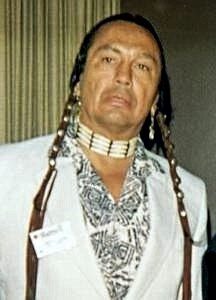
Russell Means
Russell Means was an Oglala Lakota activist for the rights of Native American people. Born November 10, 1939, in Pine Ridge Indian Reservation. Died October 22, 2012, in Porcupine. Known for Pocahontas and Thomas and the Magic Railroad. Educated at San Leandro High School.
Facts
29 facts · 2 confirmed by two sources · 5 cited · 22 from one source
Where this comes from
Papalocal keeps its own record. It started from these sources; what each one said is kept here as it was copied, so a change on their side never changes this page by itself. Tap one to read its version.
What Wikidata says · copied November 15, 2026 · revision 2566195805
- Described as
- Oglala Lakota activist for the rights of Native American people (1939-2012)
- Other names
- Russell Charles Means
- Born
- November 10, 1939 · 3 references
- Died
- October 22, 2012 · 6 references
- Born in
- Pine Ridge Indian Reservation
- Died in
- Porcupine
- Cause of death
- esophageal cancer
- Citizen of
- United States
- Occupation
- actor; musician; autobiographer; film actor; politician; voice actor; television actor · 1 reference; peace activist · 1 reference
- Political party
- Libertarian Party
- Education
- San Leandro High School
- Member of
- American Indian Movement (1968–)
- Known for
- Pocahontas; Thomas and the Magic Railroad
- Field
- actor; activism · 1 reference; politics · 1 reference; acting · 1 reference; music · 1 reference; literature · 1 reference
- Children
- Tatanka Means; Tatewin Means
- Siblings
- Lorelei DeCora Means
- Website
- http://www.russellmeans.com/ · 1 reference
- Wikipedias with a page
- 33
Wikidata item Q319799 (wikidata.org/wiki/Q319799), public domain (CC0). Copied November 15, 2026.
What Wikipedia says · copied November 15, 2026 · revision 1385891356
Russell Charles Means (Lakota: Waŋblí Ohítika; November 10, 1939 – October 22, 2012) was an Oglala Lakota activist for the rights of Native Americans, libertarian political activist, actor, musician and writer. He became a prominent member of the American Indian Movement (AIM) after joining the organization in December 1969 and helped organize events that attracted national and international media coverage.
Means was active in international issues of indigenous peoples, including working with groups in Central and South America and with the United Nations for recognition of their rights. He was active in politics at his native Pine Ridge Indian Reservation and at the state and national level.
Beginning an acting career in 1992, he appeared on numerous television series and in several films, including The Last of the Mohicans, Pocahontas, and Curb Your Enthusiasm. He released his own music CD. Means published his autobiography Where White Men Fear to Tread in 1995.
- Born, in its opening lines
- November 10, 1939
- Died, in its opening lines
- October 22, 2012
From the Wikipedia article “Russell Means” (en.wikipedia.org/wiki/Russell_Means), by its contributors, under CC BY-SA 4.0 (creativecommons.org/licenses/by-sa/4.0/). Copied November 15, 2026; not changed.
Confirmed Two sources agree. Cited One source, and it names where it got it. One source One source, without a reference of its own. Sources disagree The sources disagree. We show the best-supported value and keep theirs below.
