
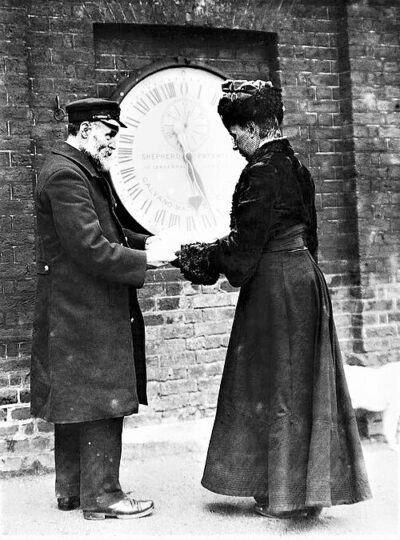
Ruth Belville
Ruth Belville was a British businesswoman. Born March 5, 1854, in Greenwich. Died December 7, 1943, in Beddington.
Facts
13 facts · 2 confirmed by two sources · 7 cited · 4 from one source
Where this comes from
Papalocal keeps its own record. It started from these sources; what each one said is kept here as it was copied, so a change on their side never changes this page by itself. Tap one to read its version.
What Wikidata says · copied November 17, 2026 · revision 2553287039
- Described as
- British businesswoman (1854–1943)
- Other names
- the Greenwich Time Lady, Elizabeth Ruth Naomi Belville
- Born
- March 5, 1854 · 2 references
- Died
- December 7, 1943 · 2 references
- Born in
- Greenwich · 1 reference
- Died in
- Beddington · 1 reference
- Buried in
- Streatham Park Cemetery · 1 reference
- Cause of death
- carbon monoxide poisoning · 1 reference
- Name at birth
- Elizabeth Ruth Naomi Belville
- Citizen of
- United Kingdom
- Occupation
- businessperson; horologist · 1 reference; merchant · 1 reference
- Father
- John Henry Belville · 1 reference
- Lived in
- London
- Wikipedias with a page
- 27
Wikidata item Q468475 (wikidata.org/wiki/Q468475), public domain (CC0). Copied November 17, 2026.
What Wikipedia says · copied November 17, 2026 · revision 1349389830
Elizabeth Ruth Naomi Belville (5 March 1854 – 7 December 1943), also known as the Greenwich Time Lady, was a businesswoman from London. She, her mother Maria Elizabeth, and her father John Henry, sold people the time. This was done by setting Belville's watch to Greenwich Mean Time, as shown by the Greenwich clock, each day and then "selling" people the time by letting them look at the watch and adjust theirs.
- Born, in its opening lines
- March 5, 1854
- Died, in its opening lines
- December 7, 1943
From the Wikipedia article “Ruth Belville” (en.wikipedia.org/wiki/Ruth_Belville), by its contributors, under CC BY-SA 4.0 (creativecommons.org/licenses/by-sa/4.0/). Copied November 17, 2026; not changed.
Confirmed Two sources agree. Cited One source, and it names where it got it. One source One source, without a reference of its own. Sources disagree The sources disagree. We show the best-supported value and keep theirs below.
