
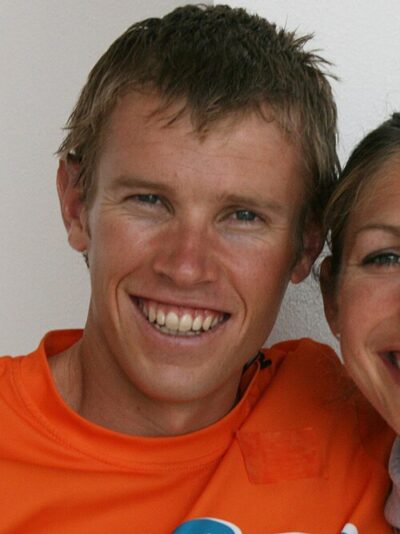
Ryan Hall is an American long-distance runner. Born October 14, 1982, in Big Bear Lake. Educated at Big Bear High School and Stanford University.

Facts
10 facts · 1 confirmed by two sources · 2 cited · 7 from one source
Where this comes from
Papalocal keeps its own record. It started from these sources; what each one said is kept here as it was copied, so a change on their side never changes this page by itself. Tap one to read its version.
What Wikidata says · copied November 19, 2026 · revision 2564942631
- Described as
- American long-distance runner
- Born
- October 14, 1982 · 1 reference
- Born in
- Big Bear Lake
- Citizen of
- United States
- Occupation
- marathon runner; athletics competitor · 1 reference
- Education
- Big Bear High School · 1 reference; Stanford University · 1 reference
- Sport
- athletics
- Spouse
- Sara Hall
- Height
- 1.78 m (5 ft 10 in)
- Wikipedias with a page
- 13
Wikidata item Q727961 (wikidata.org/wiki/Q727961), public domain (CC0). Copied November 19, 2026.
What Wikipedia says · copied November 19, 2026 · revision 1386557751
Ryan Hall (born October 14, 1982, in Kirkland, Washington) is a retired American long-distance runner who held the U.S. record in the half marathon from 2007 to 2025. Hall is the first American to break the one-hour barrier in the event, and he is also the first American to run a sub-2:05 marathon. However, this time is not eligible to be a record due to the course being point-to-point and a net-downhill course. Hall won the marathon at the 2008 United States Olympic trials and placed tenth in the Olympic marathon in Beijing.
- Born, in its opening lines
- October 14, 1982
From the Wikipedia article “Ryan Hall (runner)” (en.wikipedia.org/wiki/Ryan_Hall_(runner)), by its contributors, under CC BY-SA 4.0 (creativecommons.org/licenses/by-sa/4.0/). Copied November 19, 2026; not changed.
Confirmed Two sources agree. Cited One source, and it names where it got it. One source One source, without a reference of its own. Sources disagree The sources disagree. We show the best-supported value and keep theirs below.
