
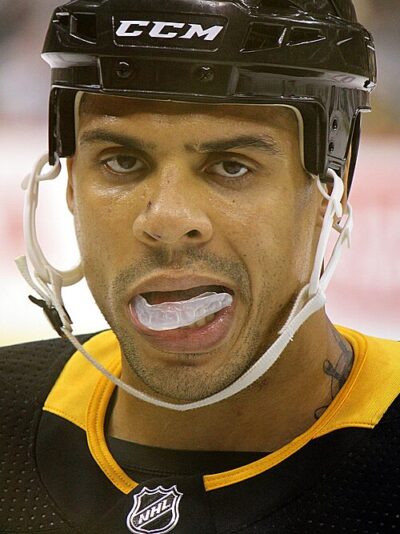
Ryan Reaves
Ryan Reaves is a Canadian-American professional ice hockey player. Born January 20, 1987, in Winnipeg. Teams include St. Louis Blues, Pittsburgh Penguins and Vegas Golden Knights. Educated at St. John's-Ravenscourt School.
Facts
16 facts · 1 confirmed by two sources · 2 cited · 13 from one source
Where this comes from
Papalocal keeps its own record. It started from these sources; what each one said is kept here as it was copied, so a change on their side never changes this page by itself. Tap one to read its version.
What Wikidata says · copied November 19, 2026 · revision 2513992854
- Described as
- Canadian-American professional ice hockey player
- Born
- January 20, 1987
- Born in
- Winnipeg
- Citizen of
- Canada; United States
- Occupation
- ice hockey player · 1 reference
- Education
- St. John's-Ravenscourt School
- Teams
- St. Louis Blues; Pittsburgh Penguins; Vegas Golden Knights; New York Rangers; Minnesota Wild; Toronto Maple Leafs
- Sport
- ice hockey · 1 reference
- Father
- Willard Reaves
- Siblings
- Jordan Reaves
- Height
- 1.85 m (6 ft 1 in) · 1 reference
- Wikipedias with a page
- 13
Wikidata item Q2178104 (wikidata.org/wiki/Q2178104), public domain (CC0). Copied November 19, 2026.
What Wikipedia says · copied November 19, 2026 · revision 1386558015
Ryan Reaves (born January 20, 1987), nicknamed "Reavo", is a Canadian-American former professional ice hockey player. He played as a right winger for 16 seasons in the National Hockey League (NHL) for the St. Louis Blues, Pittsburgh Penguins, Vegas Golden Knights, New York Rangers, Minnesota Wild, Toronto Maple Leafs, and San Jose Sharks. He is the son of former gridiron football player, Willard Reaves, who played in the Canadian Football League (CFL) and National Football League (NFL).
- Born, in its opening lines
- January 20, 1987
From the Wikipedia article “Ryan Reaves” (en.wikipedia.org/wiki/Ryan_Reaves), by its contributors, under CC BY-SA 4.0 (creativecommons.org/licenses/by-sa/4.0/). Copied November 19, 2026; not changed.
Confirmed Two sources agree. Cited One source, and it names where it got it. One source One source, without a reference of its own. Sources disagree The sources disagree. We show the best-supported value and keep theirs below.
