
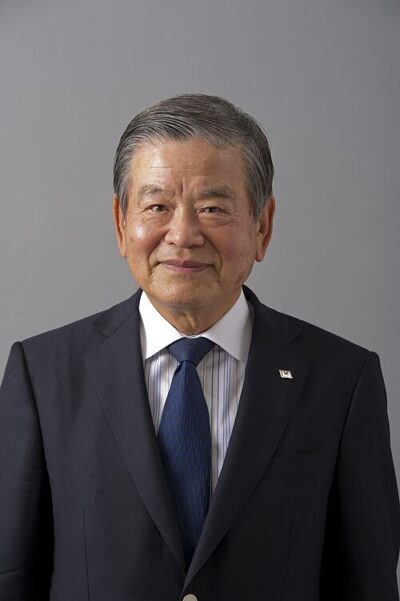
Saburo Kawabuchi
Saburo Kawabuchi is a Japanese association football player and manager. Born December 3, 1936, in Takaishi. Positions held include J. League chairman (1991–2002). Educated at Waseda University. Awards include Person of Cultural Merit and Silver Olympic Order.
Facts
13 facts · 1 confirmed by two sources · 2 cited · 10 from one source
Where this comes from
Papalocal keeps its own record. It started from these sources; what each one said is kept here as it was copied, so a change on their side never changes this page by itself. Tap one to read its version.
What Wikidata says · copied November 16, 2026 · revision 2536713709
- Described as
- Japanese association football player and manager
- Born
- December 3, 1936 · 2 references
- Born in
- Takaishi
- Citizen of
- Japan
- Occupation
- association football player; association football coach · 1 reference
- Positions held
- J. League chairman (1991–2002) · 1 reference
- Education
- Waseda University
- Teams
- JEF United Chiba (1961–1970); Japan men's national football team (1958–1965)
- Sport
- association football
- Awards
- Person of Cultural Merit (2015); Silver Olympic Order (2016)
- Height
- 1.72 m (5 ft 8 in) · 1 reference
- Wikipedias with a page
- 52
Wikidata item Q2535466 (wikidata.org/wiki/Q2535466), public domain (CC0). Copied November 16, 2026.
What Wikipedia says · copied November 16, 2026 · revision 1383007365
Saburo Kawabuchi (川淵 三郎, Kawabuchi Saburō; born December 3, 1936) is a Japanese former footballer and football manager. He played for and managed the Japan national team. He is the founder and honorary chairman of the J.League. Between 2002 and 2008, he served as president of the Japan Football Association.
- Born, in its opening lines
- December 3, 1936
From the Wikipedia article “Saburō Kawabuchi” (en.wikipedia.org/wiki/Saburō_Kawabuchi), by its contributors, under CC BY-SA 4.0 (creativecommons.org/licenses/by-sa/4.0/). Copied November 16, 2026; not changed.
Confirmed Two sources agree. Cited One source, and it names where it got it. One source One source, without a reference of its own. Sources disagree The sources disagree. We show the best-supported value and keep theirs below.
