
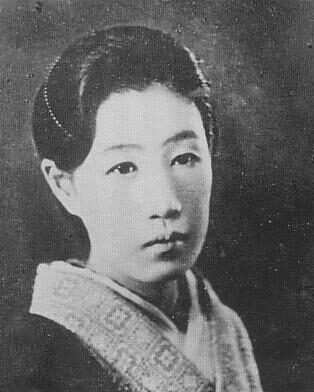
Sada Abe was the 20th-century Japanese murderer. Born May 28, 1905, in Kanda.
Facts
7 facts · 1 confirmed by two sources · 0 cited · 6 from one source
Where this comes from
Papalocal keeps its own record. It started from these sources; what each one said is kept here as it was copied, so a change on their side never changes this page by itself. Tap one to read its version.
What Wikidata says · copied November 16, 2026 · revision 2537313212
- Described as
- 20th-century Japanese murderer
- Born
- May 28, 1905
- Born in
- Kanda
- Citizen of
- Empire of Japan; Japan
- Occupation
- geisha; criminal (1936); sex worker (–1936)
- Wikipedias with a page
- 29
Wikidata item Q264924 (wikidata.org/wiki/Q264924), public domain (CC0). Copied November 16, 2026.
What Wikipedia says · copied November 16, 2026 · revision 1379755175
Sada Abe (阿部 定, Abe Sada; born May 28, 1905; disappeared 1970) was a Japanese geisha and prostitute who murdered her lover, Kichizō Ishida (石田 吉蔵), via strangulation on May 18, 1936, before cutting off his penis and testicles and carrying them around with her in her kimono. The story became a national sensation in Japan, acquiring mythic overtones; it has also been interpreted by artists, philosophers, novelists and filmmakers. Abe was released after serving five years in prison and went on to write an autobiography.
- Born, in its opening lines
- May 28, 1905
From the Wikipedia article “Sada Abe” (en.wikipedia.org/wiki/Sada_Abe), by its contributors, under CC BY-SA 4.0 (creativecommons.org/licenses/by-sa/4.0/). Copied November 16, 2026; not changed.
Confirmed Two sources agree. Cited One source, and it names where it got it. One source One source, without a reference of its own. Sources disagree The sources disagree. We show the best-supported value and keep theirs below.
