
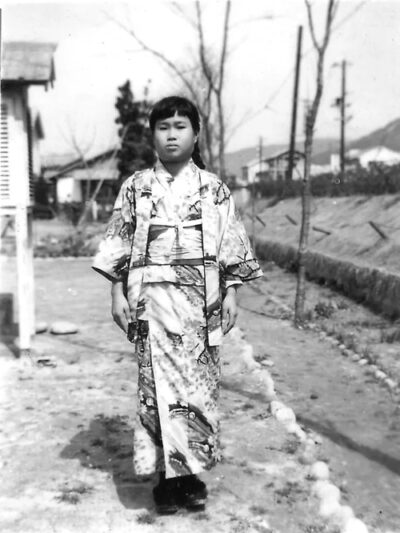
Sadako Sasaki
Sadako Sasaki was a Japanese origami artist. Born January 7, 1943, in Hiroshima. Died October 25, 1955, in Hiroshima Red Cross Hospital & Atomic Bomb Survivors Hospital.
Facts
8 facts · 2 confirmed by two sources · 2 cited · 4 from one source
Where this comes from
Papalocal keeps its own record. It started from these sources; what each one said is kept here as it was copied, so a change on their side never changes this page by itself. Tap one to read its version.
What Wikidata says · copied November 16, 2026 · revision 2537316228
- Described as
- Japanese origami artist
- Born
- January 7, 1943 · 1 reference
- Died
- October 25, 1955 · 1 reference
- Born in
- Hiroshima · 1 reference
- Died in
- Hiroshima Red Cross Hospital & Atomic Bomb Survivors Hospital
- Cause of death
- lymphoid leukemia
- Citizen of
- Japan; Empire of Japan (–1947)
- Occupation
- schoolchild · 1 reference
- Wikipedias with a page
- 51
Wikidata item Q231997 (wikidata.org/wiki/Q231997), public domain (CC0). Copied November 16, 2026.
What Wikipedia says · copied November 16, 2026 · revision 1380612085
Sadako Sasaki (佐々木 禎子, Sasaki Sadako; January 7, 1943 – October 25, 1955) was a Japanese girl who became a victim of the atomic bombing of Hiroshima by the United States. She was two years of age when the bombs were dropped and was severely irradiated. She survived for another ten years, becoming one of the most widely known hibakusha—a Japanese term meaning "bomb-affected person". She is remembered through the story of the more than one thousand origami cranes she folded before her death. She died at the age of 12 on October 25, 1955, at the Hiroshima Red Cross Hospital.
- Born, in its opening lines
- January 7, 1943
- Died, in its opening lines
- October 25, 1955
From the Wikipedia article “Sadako Sasaki” (en.wikipedia.org/wiki/Sadako_Sasaki), by its contributors, under CC BY-SA 4.0 (creativecommons.org/licenses/by-sa/4.0/). Copied November 16, 2026; not changed.
Confirmed Two sources agree. Cited One source, and it names where it got it. One source One source, without a reference of its own. Sources disagree The sources disagree. We show the best-supported value and keep theirs below.
