
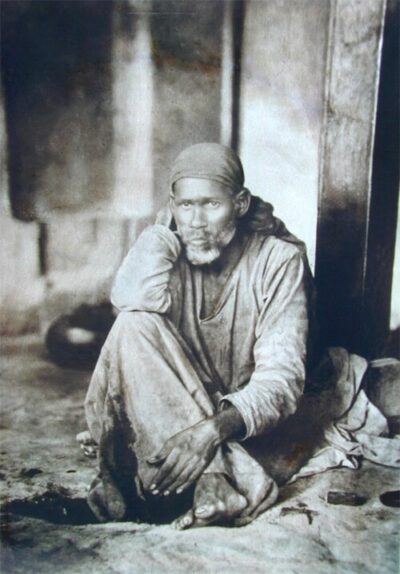
Sai Baba of Shirdi was an Indian saint. Born 1836. Died October 15, 1918, in Shirdi.
Facts
8 facts · 1 confirmed by two sources · 1 cited · 5 from one source · 1 where the sources disagree
What’s different
- Born: we show 1836 (Sources disagree). Wikipedia says c. 1838
Where this comes from
Papalocal keeps its own record. It started from these sources; what each one said is kept here as it was copied, so a change on their side never changes this page by itself. Tap one to read its version.
What Wikidata says · copied November 16, 2026 · revision 2558024301
- Described as
- Indian saint
- Other names
- Chand Miyan, Sai Ram
- Born
- 1836 · 1 reference
- Died
- October 15, 1918 · 1 reference
- Died in
- Shirdi
- Citizen of
- British Raj
- Occupation
- ascetic; guru · 1 reference
- Field
- religion
- Religion
- Hinduism
- Wikipedias with a page
- 46
Wikidata item Q260440 (wikidata.org/wiki/Q260440), public domain (CC0). Copied November 16, 2026.
What Wikipedia says · copied November 16, 2026 · revision 1380439179
Sai Baba of Shirdi (c. 1838–15 October 1918), also known as Shirdi Sai Baba, was an Indian spiritual master considered to be a saint, and revered by both Hindu and Muslim devotees during and after his lifetime.
According to accounts from his life, Sai Baba preached the importance of "realisation of the self" and criticised "love towards perishable things". His teachings concentrated on a moral code of love, forgiveness, helping others, charity, contentment, inner peace, and devotion to God and Guru.
Sai Baba condemned discrimination based on religion or caste. He had both Hindu and Muslim followers, but when pressed on his own religious affiliations, he refused to identify himself with one to the exclusion of the other. His teachings combined elements of Hinduism and Islam: he gave the Hindu name Dwarakamayi to the mosque in which he lived, practised both Hindu and Muslim rituals, and taught using words and figures that drew from both traditions. According to the Shri Sai Satcharita, a hagiography written shortly after his death, his Hindu devotees believed him to be an incarnation of the Hindu deity Dattatreya.
- Born, in its opening lines
- c. 1838
- Died, in its opening lines
- October 15, 1918
From the Wikipedia article “Sai Baba of Shirdi” (en.wikipedia.org/wiki/Sai_Baba_of_Shirdi), by its contributors, under CC BY-SA 4.0 (creativecommons.org/licenses/by-sa/4.0/). Copied November 16, 2026; not changed.
Confirmed Two sources agree. Cited One source, and it names where it got it. One source One source, without a reference of its own. Sources disagree The sources disagree. We show the best-supported value and keep theirs below.
