
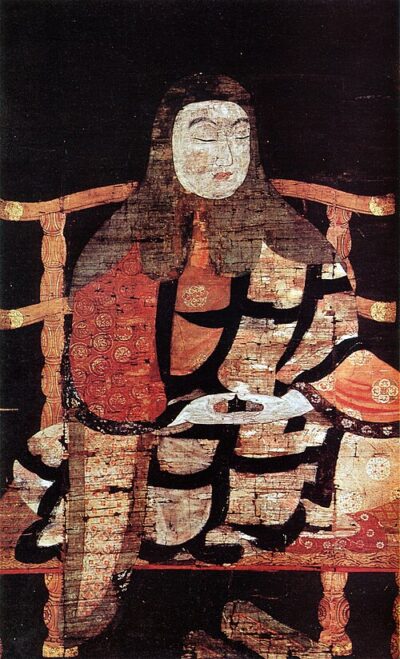
Saichō
Saichō was a Japanese Buddhist monk, founder of the Japanese Tendai school. Born September 15, 767, in Shiga district. Died June 26, 822, in Mount Hiei. Known for An Essay on the Protection of the Nation and The Regulations for the Students of the Mountain School.
Facts
13 facts · 2 confirmed by two sources · 0 cited · 11 from one source
Where this comes from
Papalocal keeps its own record. It started from these sources; what each one said is kept here as it was copied, so a change on their side never changes this page by itself. Tap one to read its version.
What Wikidata says · copied November 17, 2026 · revision 2560568797
- Described as
- Japanese Buddhist monk, founder of the Japanese Tendai school
- Other names
- Saicho, Saichou, Dengyō Daishi
- Born
- September 15, 767
- Died
- June 26, 822
- Born in
- Shiga district
- Died in
- Mount Hiei
- Buried in
- Enryaku-ji Temple
- Citizen of
- Japan
- Occupation
- Buddhist monk; calligrapher; philosopher · 1 reference
- Known for
- An Essay on the Protection of the Nation; The Regulations for the Students of the Mountain School
- Father
- Mitsuno Momoe · 1 reference
- Religion
- Tendai
- Wikipedias with a page
- 27
Wikidata item Q449943 (wikidata.org/wiki/Q449943), public domain (CC0). Copied November 17, 2026.
What Wikipedia says · copied November 17, 2026 · revision 1379820704
Saichō (最澄; Japanese pronunciation: [saꜜi.tɕoː], September 15, 767 – June 26, 822) was a Japanese Buddhist monk credited with founding the Japanese Tendai school of Buddhism. He was awarded the posthumous title of Dengyō Daishi (伝教大師).
Recognized for his significant contributions to the development of Japanese Buddhism, Saichō is most famous for introducing the Chinese Tiantai school to Japan, which he adapted into the Tendai tradition. Saichō traveled to Tang China in 804, where he studied the Chinese Tiantai school (along with other traditions). After returning to Japan, he founded the temple and headquarters of Tendai at Enryaku-ji on Mount Hiei (near the capital of Kyoto), which became the center of Tendai practice and a major institution in the history of Japanese Buddhism.
Saichō emphasized the integration of the Tiantai teachings on meditation, study, precepts, and ritual practice, with the mantrayana practices of Chinese Esoteric Buddhism. He also worked to establish a new ordination system which was based on the bodhisattva precepts, rather than the traditional monastic rule (Vinaya) precepts.
Saichō's Tendai school laid the groundwork for the development of later Japanese Buddhist traditions, including Pure Land, and Zen Buddhism.
- Born, in its opening lines
- September 15, 767
- Died, in its opening lines
- June 26, 822
From the Wikipedia article “Saichō” (en.wikipedia.org/wiki/Saichō), by its contributors, under CC BY-SA 4.0 (creativecommons.org/licenses/by-sa/4.0/). Copied November 17, 2026; not changed.
Confirmed Two sources agree. Cited One source, and it names where it got it. One source One source, without a reference of its own. Sources disagree The sources disagree. We show the best-supported value and keep theirs below.
