
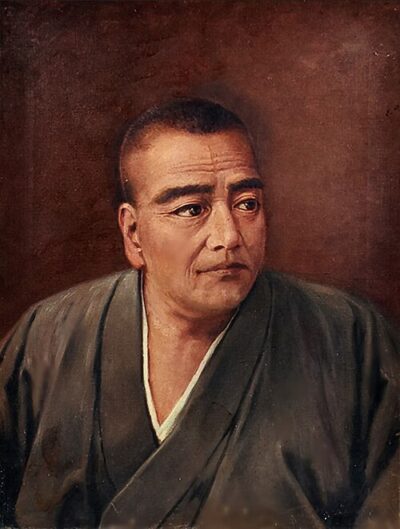
Saigō Takamori
Saigō Takamori was a samurai of the Satsuma domain, supreme commander of Japanese army, one of the three great nobles who led the Meiji Restoration. Born January 23, 1828, in Kajiya-chō. Died September 24, 1877, in Yamashita-chō. Positions held include daisanji. Known for Nanshūō Ikun.
Facts
34 facts · 2 confirmed by two sources · 0 cited · 31 from one source · 1 where the sources disagree
What’s different
- Cause of death: we show gunshot wound (Sources disagree). Wikidata also lists decapitation
Where this comes from
Papalocal keeps its own record. It started from these sources; what each one said is kept here as it was copied, so a change on their side never changes this page by itself. Tap one to read its version.
What Wikidata says · copied November 16, 2026 · revision 2559795340
- Described as
- samurai of the Satsuma domain, supreme commander of Japanese army, one of the three great nobles who led the Meiji Restoration (1828-1877)
- Other names
- Saigo Takamori, Saigou Takamori, Takanaga, Nanshū, Saigō don, Sego don
- Born
- January 23, 1828 · 2 references
- Died
- September 24, 1877 · 2 references
- Born in
- Kajiya-chō
- Died in
- Yamashita-chō
- Buried in
- Nanshū Shrine
- Cause of death
- gunshot wound · 1 reference; decapitation · 1 reference
- Name at birth
- 隆永
- Citizen of
- Japan
- Occupation
- bushi; samurai; politician; military personnel
- Positions held
- daisanji
- Worked for
- Satsuma Domain
- Member of
- Seichūgumi; caretaker government
- Known for
- Nanshūō Ikun
- Spouse
- Ijūin Suga; Arikana; Saigō Itoko
- Children
- Saigō Kikujirō; Toratarō Saigō; Saigō Kikusō
- Father
- Saigō Kichibei
- Mother
- Shiihara Masa
- Siblings
- Ichiki Koto; Saigō Taka; Saigō Kohei; Saigō Kichijirō; Saigō Tsugumichi
- Religion
- Confucianism
- Military branch
- Imperial Japanese Army
- Military rank
- gensui; general
- Wikipedias with a page
- 52
Wikidata item Q310462 (wikidata.org/wiki/Q310462), public domain (CC0). Copied November 16, 2026.
What Wikipedia says · copied November 16, 2026 · revision 1385683168
Saigō Takamori (西郷 隆盛; 23 January 1828 – 24 September 1877) was a Japanese samurai and politician who was one of the most influential figures in Japanese history. He played a key role in the Meiji Restoration which overthrew the Tokugawa shogunate in 1868, and subsequently served in the new Meiji government. However, he later became disillusioned with the direction of the new regime and led the Satsuma Rebellion against it in 1877, in which he was killed.
Born into a low-ranking samurai family in Satsuma Domain, Saigō rose to prominence as a retainer of Shimazu Nariakira, the daimyō of Satsuma. He was involved in national politics in Edo and Kyoto, advocating for shogunal reform and a stronger imperial role. After Nariakira's death, Saigō was exiled twice, first to Amami Ōshima and then to the harsher Okinoerabujima, periods during which he developed his political and philosophical ideas. Pardoned and recalled, he played a crucial part in forging the Satchō Alliance between Satsuma and Chōshū Domain, which was instrumental in the shogunate's downfall during the Boshin War. Saigō commanded imperial forces and negotiated the bloodless surrender of Edo Castle.
In the Meiji government, Saigō initially held significant posts, including commander of the Imperial Guard, and was involved in major reforms such as the abolition of the han system. He was a central figure in the caretaker government during the Iwakura Mission. In 1873, he resigned from the government over policy disagreements, particularly the rejection of his proposal for a mission to Korea (Seikanron). Returning to his native Kagoshima, Saigō became the reluctant leader of disaffected samurai who rose against the central government in the Satsuma Rebellion. Despite initial successes, the rebellion was crushed by the numerically and technologically superior Imperial Japanese Army. Saigō died by seppuku after being critically wounded in the final battle at Shiroyama. All of his men were killed in action.
Saigō's death cemented his legendary status. He is often referred to as "the last true samurai" and remains a highly popular and romanticized figure in Japan. His life and death have been the subject of numerous books, films, and artistic depictions, reflecting an enduring fascination with his character and his complex role in Japan's transition from feudalism to a modern state. While historical accounts of his actions and motivations vary, Saigō Takamori is widely regarded as a symbol of samurai virtue, sincerity, and tragic heroism.
- Born, in its opening lines
- January 23, 1828
- Died, in its opening lines
- September 24, 1877
From the Wikipedia article “Saigō Takamori” (en.wikipedia.org/wiki/Saigō_Takamori), by its contributors, under CC BY-SA 4.0 (creativecommons.org/licenses/by-sa/4.0/). Copied November 16, 2026; not changed.
Confirmed Two sources agree. Cited One source, and it names where it got it. One source One source, without a reference of its own. Sources disagree The sources disagree. We show the best-supported value and keep theirs below.
