
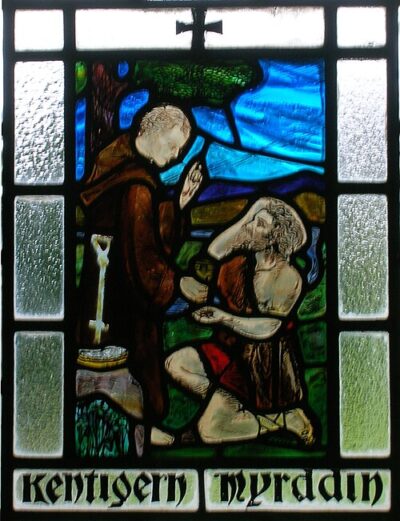
Saint Mungo
Saint Mungo was an apostle of the British Kingdom of Strathclyde in the late 6th century. Born 550, in Culross. Died January 13, 614, in Glasgow. Positions held include bishop.
Facts
10 facts · 0 confirmed by two sources · 0 cited · 10 from one source
Where this comes from
Papalocal keeps its own record. It started from these sources; what each one said is kept here as it was copied, so a change on their side never changes this page by itself. Tap one to read its version.
What Wikidata says · copied November 18, 2026 · revision 2568029453
- Described as
- apostle of the British Kingdom of Strathclyde in the late 6th century
- Other names
- Kentigern, Mungo, Conval, Saint Kentigern, St. Kentigern, St. Mungo, Saint Cyndeyrn
- Born
- 550
- Died
- January 13, 614
- Born in
- Culross
- Died in
- Glasgow
- Occupation
- presbyter
- Positions held
- bishop
- Father
- Owain mab Urien
- Mother
- Teneu · 1 reference
- Lived in
- Glasgow; St Asaph
- Wikipedias with a page
- 20
Wikidata item Q545175 (wikidata.org/wiki/Q545175), public domain (CC0). Copied November 18, 2026.
What Wikipedia says · copied November 18, 2026 · revision 1385043310
Kentigern (Welsh: Cyndeyrn Garthwys; Latin: Kentigernus), known as Mungo, was a missionary in the Brittonic Kingdom of Alt Clut in the late sixth century, and the founder and patron saint of the city of Glasgow.
From the Wikipedia article “Saint Mungo” (en.wikipedia.org/wiki/Saint_Mungo), by its contributors, under CC BY-SA 4.0 (creativecommons.org/licenses/by-sa/4.0/). Copied November 18, 2026; not changed.
Confirmed Two sources agree. Cited One source, and it names where it got it. One source One source, without a reference of its own. Sources disagree The sources disagree. We show the best-supported value and keep theirs below.
