
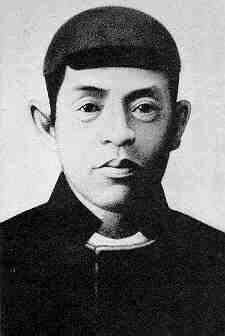
Saitō Hajime
Saitō Hajime was a Japanese swordsman. Born February 18, 1844, in Edo. Died September 28, 1915, in Tokyo.
Facts
10 facts · 2 confirmed by two sources · 0 cited · 8 from one source
Where this comes from
Papalocal keeps its own record. It started from these sources; what each one said is kept here as it was copied, so a change on their side never changes this page by itself. Tap one to read its version.
What Wikidata says · copied November 18, 2026 · revision 2517899996
- Described as
- Japanese swordsman (1844–1915)
- Other names
- Fujita Gorō, Saito Hajime, Saitou Hajime
- Born
- February 18, 1844 · 1 reference
- Died
- September 28, 1915 · 1 reference
- Born in
- Edo
- Died in
- Tokyo
- Cause of death
- peptic ulcer disease
- Citizen of
- Japan
- Occupation
- military personnel; samurai
- Worked for
- Tokyo Metropolitan Police Department · 1 reference
- Military rank
- captain
- Wikipedias with a page
- 20
Wikidata item Q138256 (wikidata.org/wiki/Q138256), public domain (CC0). Copied November 18, 2026.
What Wikipedia says · copied November 18, 2026 · revision 1379971032
Hajime Saitō (斎藤 一) (born Hajime Yamaguchi (山口 一); February 18, 1844 – September 28, 1915) was a Japanese samurai of the late Edo period, who most famously served as the captain of the third unit of the Shinsengumi. He was one of the few core members who survived the numerous wars of the Bakumatsu period. He was later known as Fujita Gorō (藤田 五郎) and worked as a police officer in Tokyo during the Meiji Restoration where he worked mostly undercover for them and for the Japanese government.
- Born, in its opening lines
- February 18, 1844
- Died, in its opening lines
- September 28, 1915
From the Wikipedia article “Saitō Hajime” (en.wikipedia.org/wiki/Saitō_Hajime), by its contributors, under CC BY-SA 4.0 (creativecommons.org/licenses/by-sa/4.0/). Copied November 18, 2026; not changed.
Confirmed Two sources agree. Cited One source, and it names where it got it. One source One source, without a reference of its own. Sources disagree The sources disagree. We show the best-supported value and keep theirs below.
